
 EN




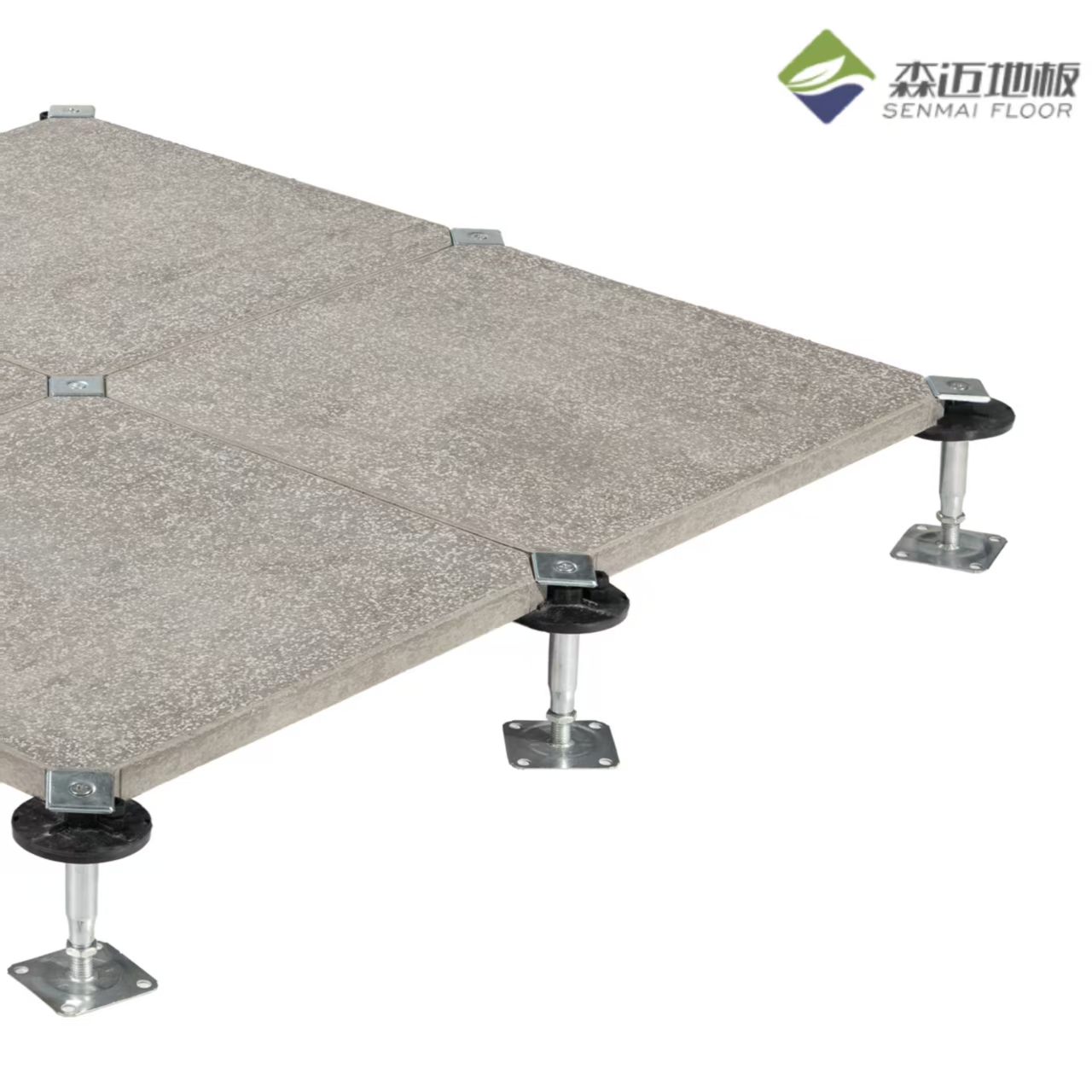
Understanding Ceramic Raised Access Floor Durability Metrics
PEI Rating, Abrasion Resistance, and EN 14411 Compliance for Ceramic Raised Access Floor Systems
The durability of a ceramic raised access floor is defined by standardized metrics that collectively predict long-term performance. The Porcelain Enamel Institute (PEI) rating remains the most widely recognized indicator of surface wear resistance. For high-traffic commercial environments—including offices, retail spaces, and transit hubs—a PEI rating of 4 or 5 is essential. These ratings reflect rigorous testing under simulated foot traffic and rolling loads, with PEI 5 reserved for the most demanding applications.
Complementing the PEI scale, EN 14411 provides a deeper assessment of abrasion resistance by measuring volume loss (in mm³) after mechanical abrasion testing. A result below 175 mm³ qualifies as heavy-duty; top-tier porcelain stoneware panels often achieve ≤110 mm³—signifying exceptional body integrity beyond surface glaze. Unlike superficial scratch tests, EN 14411 evaluates how the entire tile structure resists progressive wear over time, making it especially relevant for raised access floors subjected to repeated panel lifting and reinstallation.
Surface finish also influences longevity: unpolished or matte porcelain retains its anti-slip properties longer than polished variants under continuous abrasion. The following table synthesizes these key metrics with real-world performance expectations:
| PEI Rating | EN 14411 Abrasion Resistance (mm³) | Suitable Application | Expected High-Traffic Lifespan |
|---|---|---|---|
| 3 | ≤175 | Light commercial | 2–4 years |
| 4 | ≤150 | Standard commercial, offices | 5–10 years |
| 5 | ≤110 | Airports, transit hubs, malls | 12+ years |
While a PEI 4 rating suffices for office corridors, PEI 5 is non-negotiable for environments where rolling loads, luggage trolleys, and dense pedestrian flow converge. Specifying the correct PEI class is the single most consequential decision for lifecycle cost control and operational continuity.
Load-Bearing Performance: Static Load Capacity vs. Dynamic Impact Resistance in Real-World Use
Structural durability extends beyond surface wear—it hinges on how the panel responds to both sustained weight and sudden force. Two distinct engineering criteria govern this behavior: static load capacity and dynamic impact resistance.
Uniformly Distributed Load (UDL) ratings—typically ranging from 1,200 to 2,000 kg/m² for commercial-grade ceramic raised access floors—indicate safe static weight distribution. However, UDL alone fails to capture real-world stressors like dropped tools, rolling equipment, or concentrated point loads. That’s where dynamic impact resistance becomes decisive.
A panel may support 1,500 kg statically yet fracture under a 10 kg object dropped from 1 meter. Core composition is the critical differentiator: high-density calcium sulfate cores with monolithic back coatings deliver superior crack resistance compared to chipboard or gypsum-based alternatives. CISCA-conducted concentrated load testing—measuring deformation under a 300-pound (136 kg) point load—is a more reliable predictor of performance in IT server corridors than UDL alone. Panels passing this test maintain structural integrity across hundreds of lift-and-replace cycles without delamination or warping.
Therefore, a robust specification must require both UDL compliance and documented results from dynamic impact and concentrated load testing—not just manufacturer claims.
Ceramic Raised Access Floor vs. Common Alternatives in High-Traffic Settings
Selecting the right surface material for a ceramic raised access floor is critical in high-traffic environments, where wear resistance and impact tolerance directly influence lifecycle costs, safety, and maintenance burden.
Porcelain Stoneware vs. Standard Ceramic: Wear Resistance and Longevity Data from ASTM C1027 Testing
ASTM C1027 quantifies glazed surface abrasion resistance by measuring volume loss after standardized abrasive wheel cycles. Lower values indicate greater durability—and porcelain stoneware consistently achieves indices below 150, placing it in the highest performance tier. Standard ceramic tiles, with higher water absorption (6–8% vs. porcelain’s ≤0.5%), typically score above 300 due to their less-dense microstructure.
This density difference translates directly to field performance: porcelain stoneware panels demonstrate up to 40% greater resistance to deep abrasion in high-traffic zones. In airport terminals and retail concourses exceeding 10,000 daily footfalls, this delays visible wear onset and preserves slip resistance for over a decade. Its near-zero porosity also prevents stain penetration from spills, eliminating the need for aggressive cleaning regimens that degrade other materials over time.
Facility managers increasingly specify porcelain stoneware not only because it meets ASTM C1027 thresholds—but because it sustains aesthetic quality and functional performance across 15-year building lifecycles. The modest upfront premium is offset by reduced replacement frequency and lower labor-intensive maintenance, delivering a demonstrably lower total cost of ownership.
Comparative Scratch and Impact Performance Against Stainless Steel, HDPE, and Laminate Raised Floor Panels
When evaluating alternatives, scratch resistance and impact tolerance determine both long-term appearance and structural reliability. Porcelain stoneware registers 7–8 on the Mohs hardness scale—significantly harder than stainless steel (4–5), HDPE (2–3), and high-pressure laminate (HPL) (3–4). This hardness prevents the fine micro-scratches that rapidly dull stainless steel finishes under routine cart traffic.
Impact resistance further distinguishes porcelain: falling-ball tests (1 kg mass) show porcelain withstands 5–7 joules before fracturing, while HDPE deforms at 2–3 J and HPL cracks at just 1.5 J. The comparative data below highlights why porcelain excels in mixed-use, high-stress environments:
| Material | Mohs Hardness | Impact Resistance (J) | Typical Wear Mechanism |
|---|---|---|---|
| Porcelain Stoneware | 7–8 | 5–7 | Surface abrasion only |
| Stainless Steel | 4–5 | >10 (deforms) | Scratching, requires polishing |
| HDPE | 2–3 | 2–3 | Abrasion, permanent gouging |
| Laminate (HPL) | 3–4 | 1.5–2 | Delamination, cracking |
In raised floor applications exposed to both footfall and rolling loads, porcelain’s combination of hardness, impact resilience, and dimensional stability minimizes panel replacement. Stainless steel demands ongoing polishing to mask wear; polymers suffer irreversible deformation. Ceramic raised access floors with porcelain finishes thus deliver unmatched balance between durability, safety, and visual consistency—making them the most cost-effective solution for mission-critical commercial infrastructure.
Real-World Validation: Ceramic Raised Access Floor Performance in Demanding Commercial Environments
7-Year Airport Terminal Case Study: Footfall Volume, Maintenance Frequency, and Panel Integrity Trends
A major European airport terminal installed a ceramic raised access floor system in 2017 during a concourse modernization. Over seven years, the floor endured an average of 180,000 daily passenger movements—documented via integrated footfall sensors—as well as frequent rolling loads from luggage trolleys and industrial cleaning equipment.
The system used EN 14411-compliant porcelain stoneware panels rated PEI 4, with breaking strength exceeding 1,700 N. According to the Airport Facilities Management Report (2023), the surface retained its original gloss and slip resistance coefficient (>0.6) throughout the period. Panel replacement remained below 0.3%, with nearly all failures traced to rare edge chipping from extreme accidental impacts—not progressive wear.
In contrast, adjacent carpeted zones required deep cleaning twice as often, showed visible wear within 18 months, and incurred significantly higher labor and replacement costs. The ceramic floor’s non-porous surface prevented embedded dirt buildup, reducing daily cleaning labor by 40%. Crucially, panels were lifted and reinstalled hundreds of times for underfloor cabling access without degradation—confirming structural resilience across repeated handling cycles.
Repeated rolling load tests with 500 kg carts produced no cracks or flexure, validating dynamic impact resistance in practice. Annual floor maintenance expenditures dropped by 55% compared to the previous terrazzo installation—demonstrating that ceramic raised access floors deliver measurable, long-term value in the most demanding commercial environments.
FAQ
What is a PEI rating for ceramic floors?
A PEI rating measures the surface wear resistance of ceramic tiles, with ratings from 1 (light traffic) to 5 (heavy commercial traffic).
What does EN 14411 test for in ceramic tiles?
EN 14411 measures abrasion resistance and evaluates the overall durability of the ceramic tile’s structure, not just the surface.
Why is porcelain stoneware preferred over standard ceramic tiles?
Porcelain stoneware offers higher durability, lower porosity, and better resistance to wear and impact in high-traffic environments compared to standard ceramic tiles.
How does static load capacity differ from dynamic impact resistance?
Static load capacity measures a floor’s ability to distribute weight evenly, while dynamic impact resistance evaluates how the floor handles sudden force, such as dropped objects.
What maintenance advantages do ceramic raised floors offer?
Ceramic raised floors are non-porous and durable, reducing maintenance costs and preventing embedded dirt or stains compared to alternatives like carpet or HPL panels.