
 EN
EN




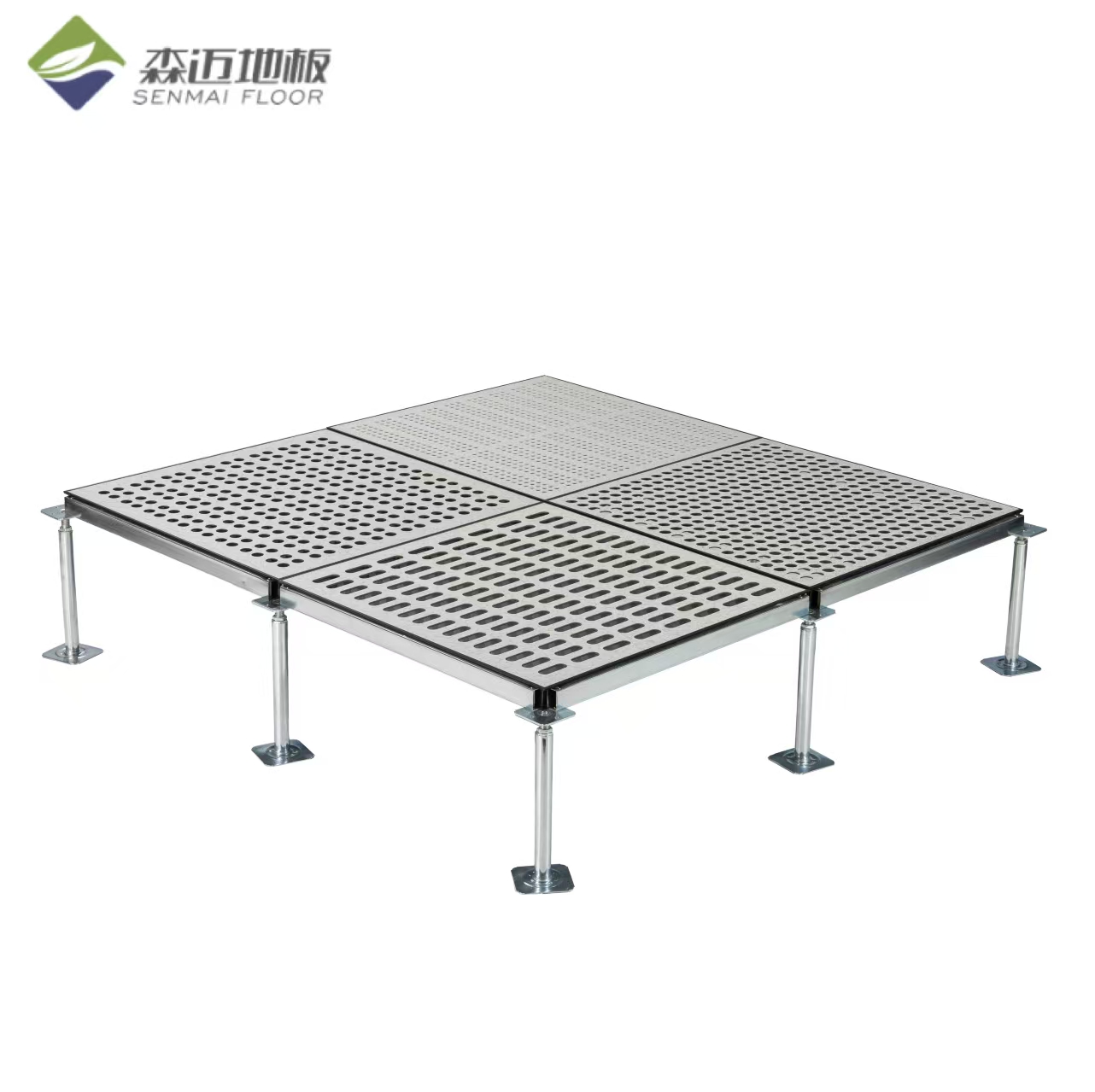
Blog Abstract: In high-tech environments such as semiconductor cleanrooms, data centers, MRI suites, and pharmaceutical laboratories, raised flooring must satisfy stringent mechanical, chemical, and physical performance standards. Aluminum raised access floors offer distinct advantages over traditional steel systems due to their specific material properties. This guide explores the engineering benefits, load capabilities, corrosion resistance, anti-static performance, and long-term economic value of die-cast aluminum access flooring.
1. High Strength-to-Weight Ratio
One of the most notable characteristics of die-cast aluminum raised floors is their high strength-to-weight ratio. Aluminum pedestals and panels weigh up to 50% less than equivalent steel systems while maintaining high load-bearing capabilities.
Structural Performance Mechanics:
-
Die-Cast Construction: High-pressure die-casting processes (such as ADC12 aluminum alloy) allow for precision manufacturing with integrated reinforcing ribs on the underside of panels.
-
Concentrated Load Capacities: Precision-engineered aluminum panels can support concentrated loads ranging from 300 kgf to over 2,000 kgf per $6.45 \text{ cm}^2$ ($1 \text{ in}^2$).
-
Structural Benefits: Lower dead weight reduces the overall dead load on building slabs, making aluminum systems ideal for multi-story buildings, seismic retrofits, or high-rise structures with restricted structural capacity.
2. Natural Corrosion Resistance and Cleanroom Compatibility
Unlike steel, which relies on surface coatings, zinc plating, or powder coats to prevent rust, aluminum naturally forms a protective oxide layer when exposed to air.
Particle Control and Chemical Resistance:
-
Zero Flaking / Rusting: The continuous oxide layer prevents surface rusting and particulate flaking, protecting cleanroom environments from airborne metal contamination.
-
Chemical Compatibility: Aluminum demonstrates high resistance to many industrial chemicals, cleaning agents, and high-humidity environments.
-
Non-Porous Surface: Smooth, non-porous surfaces allow for thorough decontamination and cleaning protocols, essential for semiconductor fabs and bio-pharmaceutical facilities.
3. Non-Magnetic Properties for Sensitive Equipment
In applications involving high-magnetic fields or sensitive signal measurements, ferrous materials can cause magnetic interference or distortion.
-
Non-Ferrous Construction: Aluminum is inherently non-magnetic.
-
Key Applications: * Semiconductor manufacturing facilities (preventing electromagnetic field distortion)
-
Medical imaging suites (such as MRI rooms)
-
Scientific research laboratories and testing facilities
-
4. Electrostatic Discharge (ESD) and Anti-Static Performance
Electrostatic discharge can damage microchips, cause data corruption, or pose safety hazards in flammable environments.
Static Control Characteristics:
-
Electrical Resistance: Systems can be engineered with conductive or static-dissipative top coverings (such as High-Pressure Laminate [HPL], conductive PVC, or electrostatic ceramic), yielding resistance values typically between $10^4\,\Omega$ and $10^9\,\Omega$.
-
Safe Grounding: Combined with the conductive aluminum core, static charges are dissipated directly through the pedestal support network into the building ground.
5. Material Comparison: Aluminum vs. Steel Access Floors
| Property | Die-Cast Aluminum Raised Floor | Welded / Cementitious Steel Floor |
| System Weight | Light (Up to 50% weight reduction) | Heavy |
| Corrosion Resistance | Superior (Self-healing oxide layer) | Requires coating (Risk of rust if scratched) |
| Particle Generation | Zero (Ideal for ISO Cleanrooms) | Low to Moderate (Risk of zinc whisker/rust flakes) |
| Magnetic Behavior | Completely Non-Magnetic | Ferrous / Magnetic |
| Service Life | 20+ Years | Dependent on ambient moisture/coatings |
| Recyclability | 100% Recyclable (Up to 94% recycled content) | Recyclable |
6. Conclusion
Aluminum raised access floors provide specialized physical properties—lightweight load capacity, non-magnetic behavior, natural corrosion resistance, and precise particle control—that steel systems cannot replicate. For cleanrooms, data centers, and advanced manufacturing plants, aluminum flooring represents a durable, anti-static, and low-maintenance investment for long-term facility performance.