
 EN




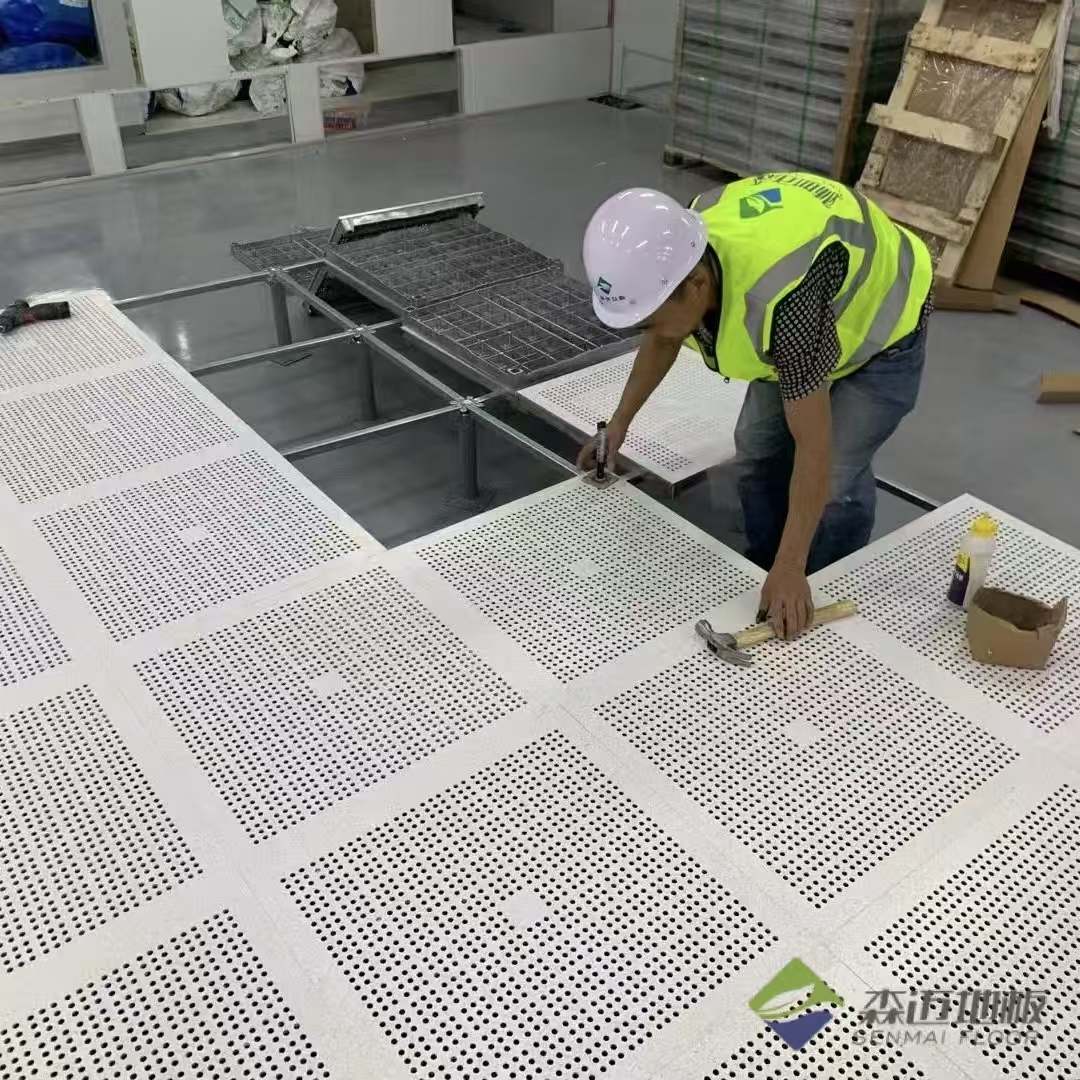
Core Electrical Resistance Standards for Anti-Static Raised Access Flooring
Anti-static raised access flooring must deliver predictable electrical resistance to protect sensitive equipment from electrostatic discharge (ESD). ANSI/ESD S7.1 and IEC 61340-4-1 provide repeatable benchmarks for resistance classification and installed-floor testing.
ANSI/ESD S7.1 and IEC 61340-4-1: Defining Acceptable Resistance Ranges
ANSI/ESD S7.1 classifies floor materials by measured resistance, giving facility managers clear thresholds for compliance. Under its framework, flooring is conductive below 1.0 × 10⁶ ohms, static dissipative from 1.0 × 10⁶ to just below 1.0 × 10⁹ ohms, and insulative at or above 1.0 × 10⁹ ohms. For anti-static raised access flooring, the static dissipative range is standard—it safely bleeds charge at a controlled rate without risking rapid discharge or electrical shock. IEC 61340-4-1 complements this by defining standardized laboratory and installed-floor test methods using electrode-based surface and through-thickness resistance measurements. Most electronics manufacturing and data center specifications require system resistance between 1.0 × 10⁶ and 1.0 × 10⁹ ohms at 100 V. Values below 1.0 × 10⁵ ohms may introduce shock hazards and are reserved only for specialized conductive applications. Together, these standards establish functional boundaries—not a single target—ensuring both safety and ESD control.
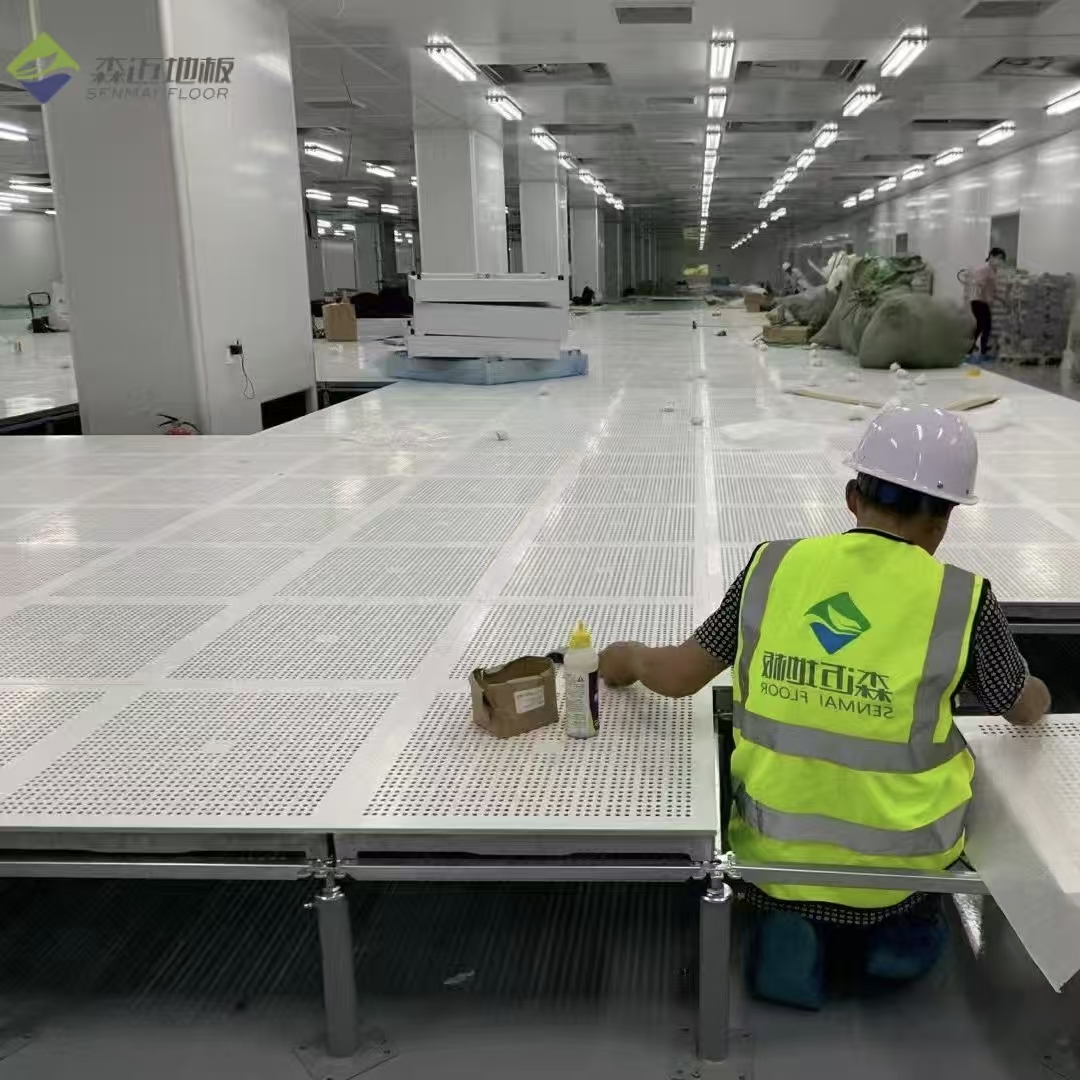
System, Point-to-Point, and Point-to-Ground Testing: Purpose and Application
Three resistance tests validate an installed anti-static raised access floor. System testing measures total resistance from the wear surface through the panel, stringer, pedestal, and bonding hardware to building ground. It verifies that all mechanical joints and grounding components function as a unified path after installation. Point-to-point testing measures resistance between two surface points using standardized electrode placement; it assesses lateral charge movement across panels and identifies issues like surface contamination, worn laminate, or poor inter-panel contact. Point-to-ground testing measures resistance from the floor surface to the facility’s designated ground point—the most direct indicator of whether a static charge can safely dissipate. In ESD-protected areas, point-to-ground readings typically must remain below 1.0 × 10⁹ ohms; cleanrooms often require ≤1.0 × 10⁶ ohms. Each test answers a distinct question: system testing confirms grounding continuity, point-to-point checks surface uniformity, and point-to-ground validates earth connection. Using all three yields a comprehensive, field-relevant assessment of performance.
Real-World Performance Validation of Anti-Static Raised Access Flooring
Laboratory resistance data alone cannot confirm real-world ESD control. Validation must simulate daily movement, cart traffic, and environmental stress to expose latent failures—such as intermittent grounding or surface degradation—that static measurements miss.
Dynamic ESD Testing: Walking, Rolling, and Dragging Simulations
Dynamic tests are essential because static resistance does not predict actual charge accumulation or decay behavior. In walking simulations, a person wearing specified footwear traverses the floor while body voltage and decay time are recorded; effective anti-static flooring maintains body voltage under 100 V and achieves full decay within seconds. Rolling tests use conductive-caster carts loaded to typical equipment weights, measuring induced voltage on the cart or adjacent isolated conductors. Dragging simulations pull a conductive sled across panel edges, joints, and stringers to reveal discontinuities in the ground path—failures often invisible during static testing. These procedures uncover weaknesses caused by worn surfaces, broken connections, or insulating coatings that pass point-to-point resistance checks but compromise ESD safety under operational conditions. Since personnel movement is the dominant ESD source in data centers and labs, dynamic test results carry greater predictive value than coupon-level lab data.
Environmental Impact: How Humidity, Temperature, and Contamination Affect Readings
Environmental conditions can shift resistance readings by several orders of magnitude. Low relative humidity (12–20 % RH), common in climate-controlled facilities, reduces surface moisture and increases both resistance and triboelectric charge generation—a floor compliant at 50 % RH may exceed 1.0 × 10⁹ ohms at low RH and fail ESD requirements. High humidity, conversely, may form a temporary conductive film that masks weak ground paths. Temperature fluctuations affect polymer and vinyl materials’ resistivity and alter mechanical contact pressure at joints. Surface contaminants—including dust, oil, wax, or acrylic sealers—create insulating layers that block conduction despite acceptable panel resistance. Therefore, validation must include conditioning at worst-case humidity and temperature, followed by standardized cleaning before re-testing. Without such controls, field measurements risk significant deviation from manufacturer specifications—and false confidence in ESD protection.
Grounding Integrity and Structural Integration in Anti-Static Raised Access Flooring
Subfloor Interface Resistance and Bonding Verification
Subfloor interface resistance ensures each pedestal, stringer, and panel bond forms a continuous, low-impedance path to building ground. Verification begins with point-to-ground measurements from panel surface to grounding bus—readings must fall within the static dissipative range per ANSI/ESD S7.1. Technicians then isolate individual pedestal-to-subfloor connections to detect high-resistance gaps caused by loose fasteners, corrosion, or non-conductive shims. Because raised floors experience micro-movement under live loads, periodic torque verification and anti-oxidation treatment at bonded joints are critical maintenance steps. Any localized deviation from the facility’s ESD control plan requires corrective action—re-torquing, cleaning, or connector replacement—before final audit. This structural integration ensures the entire floor grid remains at consistent electrical potential, eliminating floating panels that could act as inadvertent static sources.
Certification, Compliance, and Third-Party Audit Requirements
UL 2590, EN 1081, and ESD Association Certification Pathways
Certification for anti-static raised access flooring follows established pathways including UL 2590 (for electrical safety and grounding integrity), EN 1081 (for resistance performance), and ESD Association programs aligned with ANSI/ESD S20.20 and IEC 61340-5-1. Third-party auditors verify surface resistance, grounding continuity, and material stability under controlled conditions. Periodic re-audits and batch sampling ensure ongoing compliance, supporting long-term reliability in mission-critical environments. A current, third-party certificate reduces liability, facilitates cleanroom or data center acceptance, and signals adherence to globally recognized ESD control principles. Facility managers should request valid certificates and recent audit reports prior to material acceptance.
FAQ
What is anti-static raised access flooring?
Anti-static raised access flooring is a type of flooring designed to minimize electrostatic discharge (ESD), which can damage sensitive equipment. It offers controlled electrical resistance to safely dissipate accumulated electrostatic charges.
What are the resistance ranges for anti-static flooring?
According to ANSI/ESD S7.1, flooring is classified as: conductive (<1.0 × 10⁶ ohms), static dissipative (1.0 × 10⁶ to <1.0 × 10⁹ ohms), and insulative (≥1.0 × 10⁹ ohms). Anti-static floors typically fall within the static dissipative range, ensuring effective ESD control.
What tests validate anti-static flooring?
Three testing methods are used: system testing (ensures grounding continuity), point-to-point testing (assesses surface uniformity), and point-to-ground testing (validates connection to ground).
Does humidity affect electrical resistance?
Yes, environmental factors like humidity greatly impact resistance readings. Low humidity increases resistance and triboelectric charge generation, while high humidity may reduce resistance by creating temporary conductive films.
Why is third-party certification necessary?
Certification by recognized organizations ensures compliance with electrical safety, ESD standards, and performance metrics. It also demonstrates adherence to global standards, reducing risks and making facilities more reliable.