
 EN




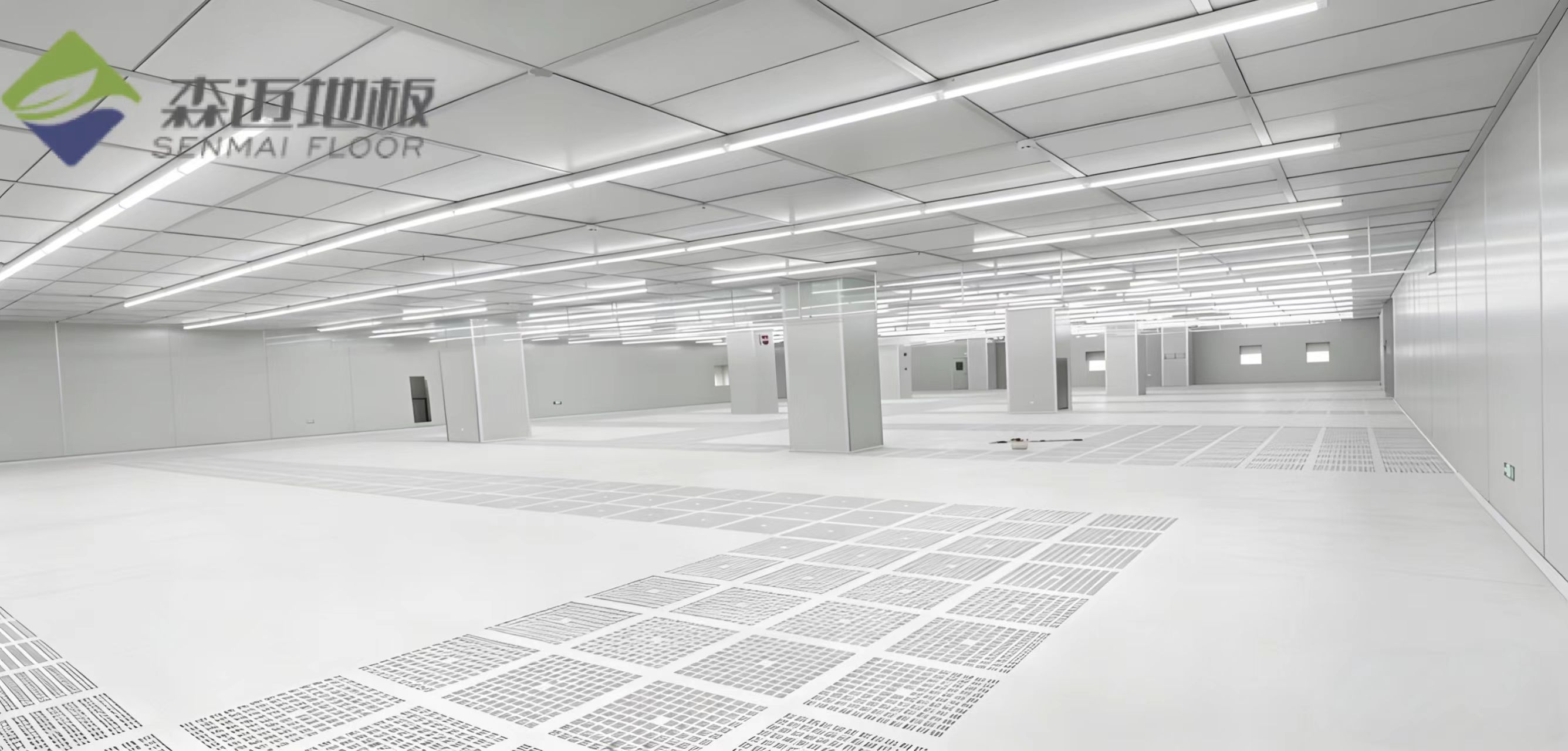
The ESD Threat: Why Sensitive Electronics Require Grounded Protection
Electrostatic discharge (ESD) remains a leading cause of immediate and latent failures in dense electronics environments. The damage often begins long before a visible spark appears.
How static charge builds and discharges in controlled environments (data centers, cleanrooms, semiconductor fabs)
Static charge builds when two materials contact and separate—a process called triboelectric charging. In data centers, vinyl flooring, equipment casters, and polyester clothing can generate body voltages above 10,000 V in low humidity (ESD Association, 2023). Cleanrooms and semiconductor fabs face similar risks from gloves, packaging films, and robotic handling. When a charged person or object nears a grounded surface, the difference in potential drives a nanosecond-scale discharge—often too small to feel, yet capable of degrading sensitive circuits. Because these facilities handle high volumes of wafers, servers, and memory modules, even infrequent discharges accumulate into measurable yield loss and field reliability issues. Anti-static raised access flooring mitigates this by providing a controlled dissipative path that keeps personnel and equipment near ground potential.

ESD damage thresholds: Why <100V can compromise modern 3nm ICs, servers, and memory modules
Modern 3 nm integrated circuits operate below 1 V and use gate oxides only a few atoms thick—making them vulnerable to discharges under 100 V, far below the human perception threshold (~2,000 V). Servers and memory modules with dense interconnects can suffer gate leakage or timing drift after a single low-energy event. Smaller transistor geometries and higher pin counts reduce the energy required to rupture gate oxide or melt interconnect metal. Latent damage may pass final test but fail later in the field—increasing downtime and warranty costs. For this reason, ESD control programs treat 100 V as the practical upper limit for unprotected handling. Grounded flooring, wrist straps, and bonded carts work together to maintain body voltage consistently below that threshold.
How Anti-Static Raised Access Flooring Works: Grounding, Conductivity, and System Integration
Core mechanism: Conductive vs. dissipative pathways (10⁶–10⁹ Ω) and UL 2585-certified grounding performance
Anti-static raised access flooring prevents charge accumulation by creating a controlled route for electrostatic discharge. Its surface and panel body provide either conductive (typically <10⁶ Ω) or dissipative (10⁶–10⁹ Ω) paths. Conductive floors enable rapid discharge in highly sensitive areas; dissipative floors slow charge flow just enough to protect both people and components—critical in data centers and semiconductor fabs where even low-energy arcs can corrupt signals or damage gates. UL 2585 certification verifies that the full system meets measurable resistance-to-ground criteria under continuous load, reducing the risk of floating potential between rack rows and workstations. In practice, each panel acts as a node that drains charge through the pedestal grid to building ground. Regular testing of point-to-point resistance and resistance-to-ground ensures the path remains intact over time.
Material science: Role of carbon, metal fibers, and graphite in enabling safe static dissipation
Carbon black, graphite, and metal fibers are embedded into the topcoat or high-pressure laminate to form a continuous conductive network across the panel surface. When a technician walks, electrons move through this network rather than accumulating locally. Carbon and graphite deliver stable resistivity—even after wear—while metal fibers enhance mechanical strength and lower overall resistance. The result is gradual, spark-free dissipation that protects sensitive assemblies and minimizes dust attraction. Without such additives, ordinary floor coverings can charge to thousands of volts; properly formulated anti-static flooring maintains consistent performance across the temperature and humidity fluctuations typical of controlled environments.
System components: Basecoat conductivity, topcoat resistivity, ground straps, and bonding grids
The flooring system functions as a layered circuit:
- Conductive basecoat carries static from the panel underside toward ground.
- Dissipative topcoat regulates how quickly charge leaves the walking surface.
- Ground straps link individual panels to the stringer or pedestal grid.
- Bonding grids unify all metallic understructure, preventing isolated conductive islands.
| Component | Primary function |
|---|---|
| Conductive basecoat | Carries static to ground |
| Dissipative topcoat | Regulates discharge from foot traffic |
| Ground straps | Connect panels to ground bus |
| Bonding grids | Unify understructure continuity |
This integration avoids open-circuit conditions—if any connection loosens, charge can accumulate and create hidden electrostatic hazards. Installation quality is therefore as critical as material selection. Inspectors verify resistance at multiple points before commissioning. A stable, verified path from surface to earth is foundational to reliable electrostatic protection.
Real-World Effectiveness: Performance Validation and Industry Compliance
Case study: 92% ESD event reduction in a Tier-III data center after deploying anti-static raised access flooring
A Tier-III data center recorded a 92% drop in electrostatic discharge events within six months of installing anti-static raised access flooring. Prior to the upgrade, continuous monitoring logged frequent low-level ESD near server racks, storage arrays, and power distribution units. After installation, floor-to-ground resistance remained consistently within the dissipative range across 4,800 m² of white space. Fault logs tied to transient voltage dropped sharply, and the facility reported fewer DRAM errors and unexpected reboots. Maintenance dispatches for static-related anomalies also declined. Independent audits confirmed the improvement could not be attributed to seasonal humidity changes—demonstrating that grounded, dissipative flooring prevents latent failures before they trigger costly hardware replacement.
Standards alignment: ISO 61340-5-1 and ANSI/ESD S20.20 requirements for electronics manufacturing and AI server farms
Electronics manufacturers and AI server farms align their ESD control programs with IEC 61340-5-1 and ANSI/ESD S20.20. These standards require floor materials to provide a measurable, low-impedance path to ground—with point-to-point resistance typically specified in the dissipative range of 10⁶–10⁹ Ω. AI server farms apply the same discipline because high-density GPU clusters are susceptible to field-induced voltages well below human perception. A compliant anti-static raised access floor supports wrist-strap grounding, cart bonding, and continuous monitoring without introducing isolated conductors. Facilities that verify floor resistance, ground strap continuity, and documentation are more likely to pass customer audits and meet warranty conditions—especially as semiconductor nodes shrink and vulnerability increases. Periodic verification closes the loop between design intent and daily operation.
Strategic Implementation: Integrating Anti-Static Raised Access Flooring into Facility-Wide ESD Control
Integrating anti-static raised access flooring into a facility-wide ESD control program requires more than panel selection. The floor must connect to a continuous, low-impedance grounding grid—using copper strips or conductive adhesive to bond each panel and the understructure. Regular resistance testing—targeting 10⁶ to 10⁹ ohms—confirms the system maintains predictable dissipation paths to ground within the ESD protected area (EPA). Compatibility with personnel grounding methods (e.g., heel grounders, wrist straps, and ESD-controlled footwear) strengthens protection. Consistent humidity control further reduces charge generation in dry environments. Finally, operator training on proper use, maintenance, and test intervals ensures the flooring works in concert with grounded workstations and other static-control measures across the entire protected area.
FAQ
What is electrostatic discharge (ESD)?
ESD refers to the sudden flow of electricity between two objects with different electric potentials, often caused by contact or the close proximity of an object with a static charge to another object.
Why is ESD harmful to electronics?
ESD can damage sensitive electronic components by creating high voltages that may compromise the functionality of circuits, leading to device failures or reduced performance over time.
Why are modern 3nm integrated circuits more vulnerable to ESD?
Modern 3nm ICs operate at very low voltages and have thinner gate oxides, making them susceptible to damage from even low-energy discharges (under 100V).
What is anti-static raised access flooring?
Anti-static raised access flooring is designed to create a controlled pathway to ground, enabling safe dissipation of static charges and preventing ESD damage to sensitive electronic equipment.
What materials are used in anti-static flooring?
Common materials include carbon black, graphite, and metal fibers, which provide stability, conductivity, and mechanical strength for long-term static dissipation performance.
Why is regular resistance testing important for anti-static flooring?
Regular testing ensures that the grounding and dissipation pathways of anti-static flooring are functional and prevent the accumulation of harmful electric charges, maintaining effective ESD protection.
What standards should anti-static flooring comply with?
Anti-static flooring used in electronics manufacturing and AI server farms should comply with ISO 61340-5-1 and ANSI/ESD S20.20 standards for measurable, low-impedance grounding performance.
Table of Contents
- The ESD Threat: Why Sensitive Electronics Require Grounded Protection
-
How Anti-Static Raised Access Flooring Works: Grounding, Conductivity, and System Integration
- Core mechanism: Conductive vs. dissipative pathways (10⁶–10⁹ Ω) and UL 2585-certified grounding performance
- Material science: Role of carbon, metal fibers, and graphite in enabling safe static dissipation
- System components: Basecoat conductivity, topcoat resistivity, ground straps, and bonding grids
- Real-World Effectiveness: Performance Validation and Industry Compliance
- Strategic Implementation: Integrating Anti-Static Raised Access Flooring into Facility-Wide ESD Control
-
FAQ
- What is electrostatic discharge (ESD)?
- Why is ESD harmful to electronics?
- Why are modern 3nm integrated circuits more vulnerable to ESD?
- What is anti-static raised access flooring?
- What materials are used in anti-static flooring?
- Why is regular resistance testing important for anti-static flooring?
- What standards should anti-static flooring comply with?