
 EN
EN




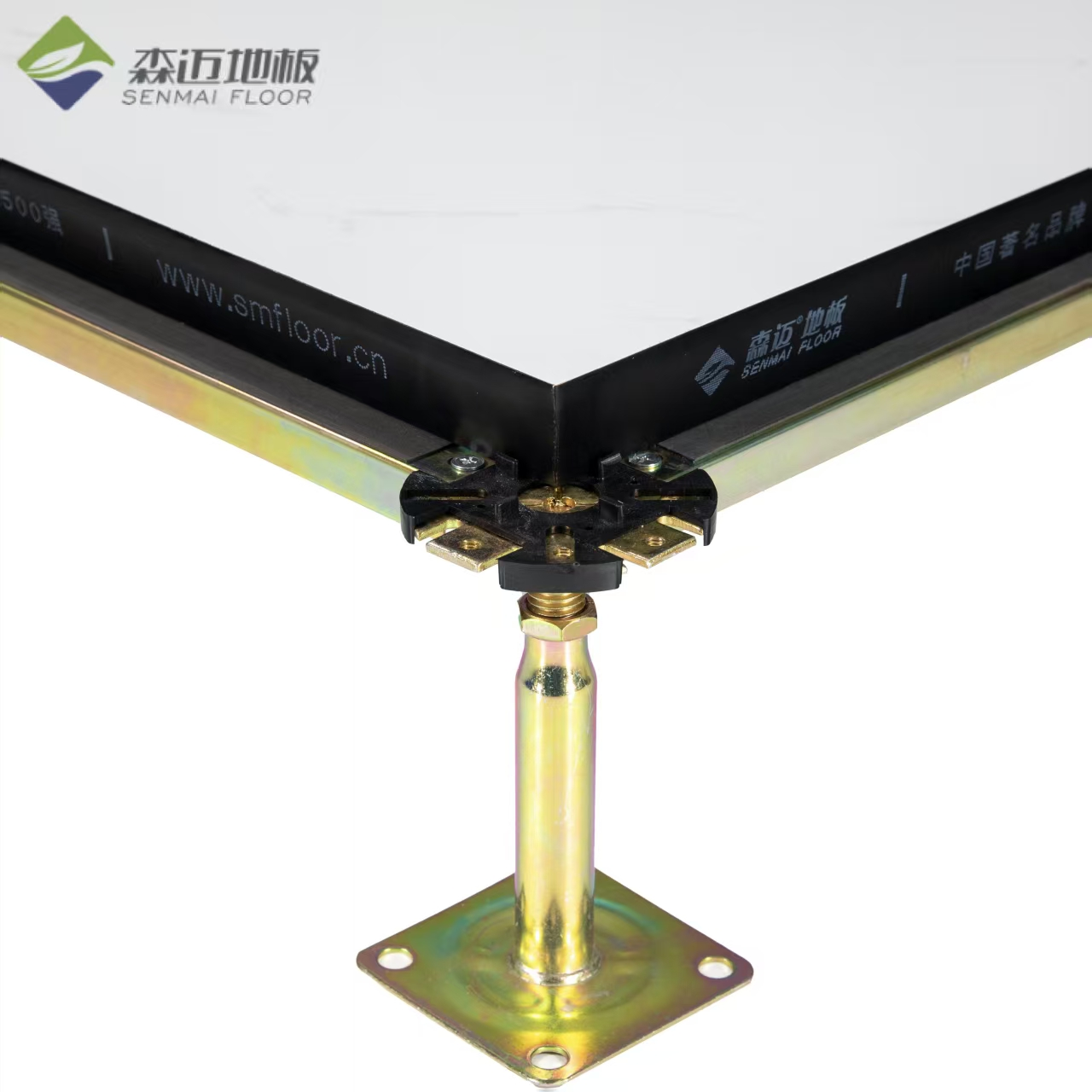
Standard Load-Bearing Capacities by Use Case
Office spaces (Class C): Considerations for loads, furniture, and people
When it comes to Class C access floors, certified to EN 12825, a support load of 4.5 kN/m² (approximately 450 kg/m²) is reliable. Use of this support load is permissible for typical office configurations, including partitions of modular workstations, filing cabinets, and some degree of pedestrian traffic. Under this rating, however, is the assumption of a uniform, balanced, and ideal installation. In the actual state of affairs, desk-leg point loads and cabinet-bases, or the stiff support of the equipment foot, can be a greater order and locally of a panel too predominately to a high order concentrated load. Working forces of rolling chairs and the like can further reduce the panel load capacity by 15 to 20 percent, causing a negative influence on the load carrying capacity, and thus resulting in the need of a conservative structural design margin when determining the panels. Load distribution plates are not optional for furniture or cabinets, and are actually a necessity to avoid the collapsibility of the panels and to prolong their life.
Environment Standard Class Uniform Load Capacity Critical Considerations
Office Spaces EN 12825 Class C 4.5 kN/m² (450 kg/m²) Point loads from furniture, dynamic traffic
Data Centers EN 12825 Class E 12.0 kN/m² (1,200 kg/m²) Rack density, thermal expansion, redundancy
Data Centers (Class E): high density rack loads, point load, and redundancy
Class E* raised access floors—constructed to EN 12825—are built to accommodate the extreme requirements of modern data centers, which support 12.0 kN/m² (≈1,200 kg/m²) of load uniformly. This support high density server racks up to and over 1,000 kg each—but only when properly supported. Rack feet often exert local loads of more than 30,000 kPa, which require the use of reinforced pedestals, structural under-panelling or custom designed load spreading solutions. Redundancy is mandatory. N+1 pedestal layouts are used to maintain support during, maintenance, or component failures. The precision cooling thermal cycling from cooling systems create cumulative thermal stress. A small temperature change (10°C) can create and increase cumulative thermal stress and reduce the effective load bearing capacity by 10-15%. The lack of integrated expansion joints and continuous subfloor monitoring will lead to micro-cracking under repeated loads and will decrease structural reliability.
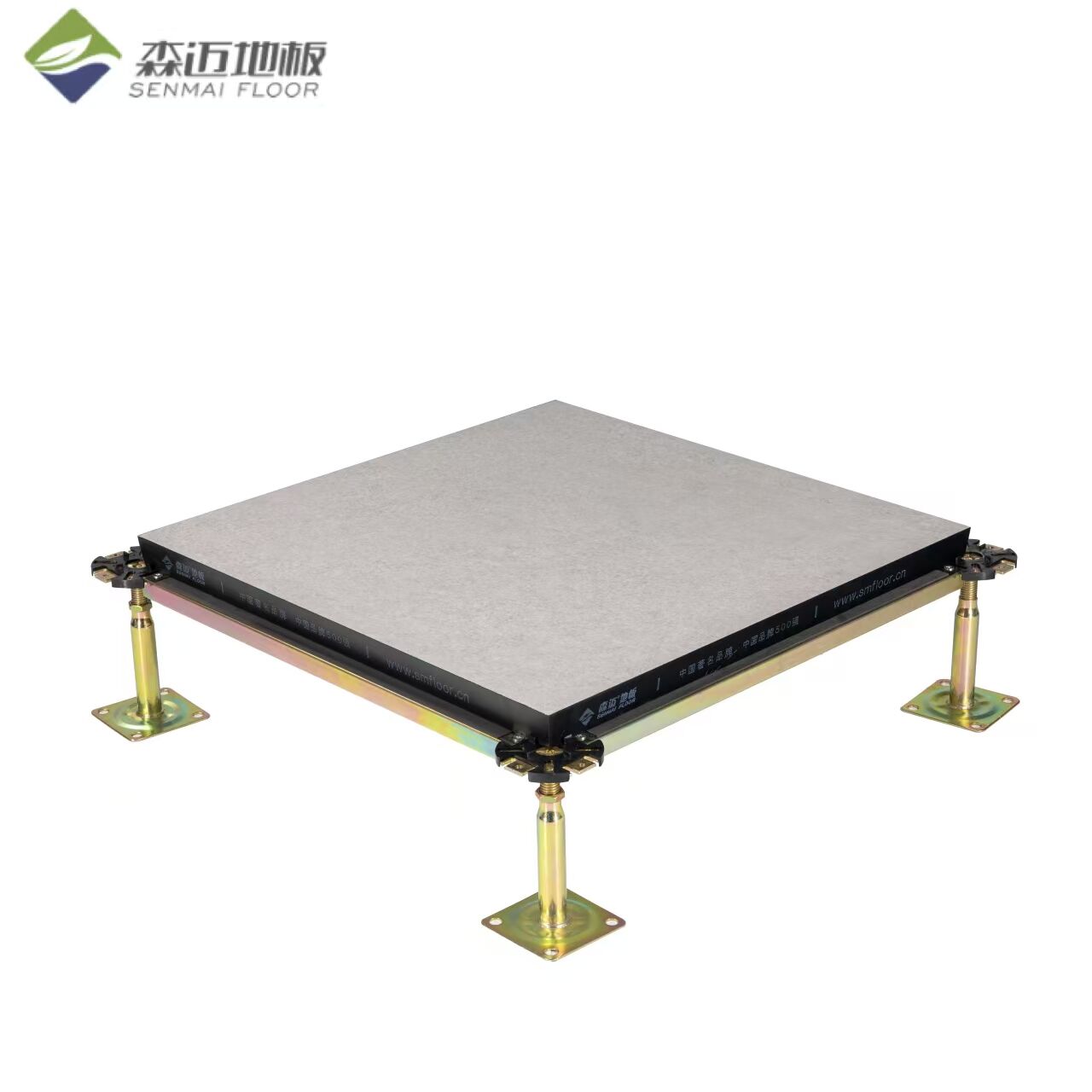
Real-World Influencing Factors on Effective Load-Bearing Capacity
Impediments to raised access floor integrity: subfloor flatness, pedestal spacing, and effects of thermal movement
Certified load ratings assume laboratory-perfect conditions; yet, three interdependent field variables consistently erode real-world performance. First, subfloor flatness deviations beyond 3 mm over 1 m2 cause panels to bridge gaps, creating concentrated stress on unsupported edges and accelerating fatigue. Second, pedestal spacing exceeding 600 mm centers reduces support efficiency; increasing spacing by 10% can diminish effective capacity by 15-20%. Third, thermal movement in steel-framed systems is rarely incorporated in the specification. Daily ambient thermal conditions cause expansion and contraction, resulting in shear forces at the panel interface and pedestal connections. The importance of these factors is that they can be defined and measured; for example, gaps in the subfloor caused by poor installation are spanned by thermal cycling, increased spacing at pedestals through the cracks, wider spacing caused by thermal cycling, and poor installation that exacerbates the deflection. Successful installation requires the design of leveling tolerances, spacing of pedestals, and gaps, as these are what determine the structural integrity of the system.
Avoiding Misunderstandings Regarding Specifications for Loads on Raised Access Floors
Raised access floors are still being designed with a lack of specificity of what clearly defined loads mean or do not mean. First, static ratings do not apply to dynamic use: rolling server racks or mobile equipment generate impact and shear forces which are three times their stationary weight, yet specifications are still being written applying static ratings for mobile equipment. Additionally, installation governs the performance: even Class E rated panels will lose, on average, 25 to 30% of their effective capacity is installed over a subfloor with a venation greater than 3 mm or with inconsistent pedestal spacing regardless of the certification of the panels. Class E floors rated for 12 kN/m2 working loads, should not be operated at sustained levels of 18 kN/m2 until failure or permanent deformation occurs. Specifications should always be inline with EN 12825 classifications and for dynamic performance the ISO 16282-1 test protocols. On-site verification of flatness should be stipulated prior to the installation of the panels.
FAQs
What does EN 12825 Classification mean and why is it important to access floors?
EN 12825 classification determines the load bearing capacity of access floors, therefore, it determines the utilization of the access floors.
Why should the expansion and contraction of access floors be a concern (thermal movement)? Why is this of concern with load bearing capacity?
The structural reliability of raised floors can be compromised by the impact of expansion and contraction over a period of time on the panel interfaces.
Why is flatness of the subfloor important for panel installation?
The primary addition flatness of the subfloor is to ensure even load distribution throughout the panel and minimize stress concentration on the edges of the panel, thereby avoiding fatigue and maintaining the effective capacity of the panel.