
 EN




How Anti-Static Raised Access Flooring Prevents ESD Damage
The Physics of Static Buildup and Discharge in Sensitive Electronic Environments
Walking across a standard floor generates electrostatic charge through triboelectric contact: when two materials separate, electrons transfer, leaving the body with excess charge. In dry air, a person may accumulate several thousand volts before touching a server rack, tool, or component. The resulting nanosecond discharge releases enough energy to damage microelectronics—or, in extreme cases, ignite flammable vapors. According to the ESD Association (ESDA), electrostatic discharge costs the electronics industry billions annually in scrap, rework, and downtime. Anti-static raised access flooring mitigates this hazard by establishing a grounded, controlled-resistance plane. Charges flow predictably from footwear, chair casters, and equipment to the floor system—limiting damaging voltage spikes, lowering body voltage, and reducing spark risk. In low-humidity environments, this continuous path to ground becomes essential. While wrist straps and heel grounders support personnel grounding, anti-static raised access flooring serves as the foundational layer of an effective ESD-protected workspace.
Anti-Static vs. Static-Dissipative vs. Conductive: Key Differences for Raised Access Flooring
These terms describe how quickly a material moves electrostatic charge to ground. Conductive flooring offers the fastest removal; static-dissipative provides safe, controlled discharge; and anti-static focuses on minimizing charge generation at the surface. For raised access flooring systems, the practical performance target is a continuous path to ground with resistance below 1 × 10⁹ ohms and body-voltage generation under 100 V.
| Category | Typical Resistance to Ground | Primary Purpose |
|---|---|---|
| Conductive | < 1 × 10⁶ Ω | Very fast charge removal; used where flammable vapors or powders are present |
| Static-dissipative | 1 × 10⁶ Ω to < 1 × 10⁹ Ω | Safe, controlled discharge for electronics assembly and data centers |
| Anti-static | Minimizes tribocharging; combined with dissipative or conductive elements to achieve system target | Prevents charge from building on the surface itself |
In practice, anti-static raised access flooring uses static-dissipative panels integrated with conductive stringers, pedestals, and bonding jumpers to form a unified grounding network. This layered approach avoids two common failure modes: excessive insulation (trapping charge) or excessive conductivity (causing abrupt discharge). The correct resistance range protects both sensitive components and personnel working near live circuits.
Design and Integration of Anti-Static Raised Access Flooring Systems
Anti-static raised access flooring depends on tightly coordinated structural and electrical design—the grid must support loads and deliver reliable static control.
Structural Components: Panels, Stringers, Pedestals, and Subfloor Void Requirements
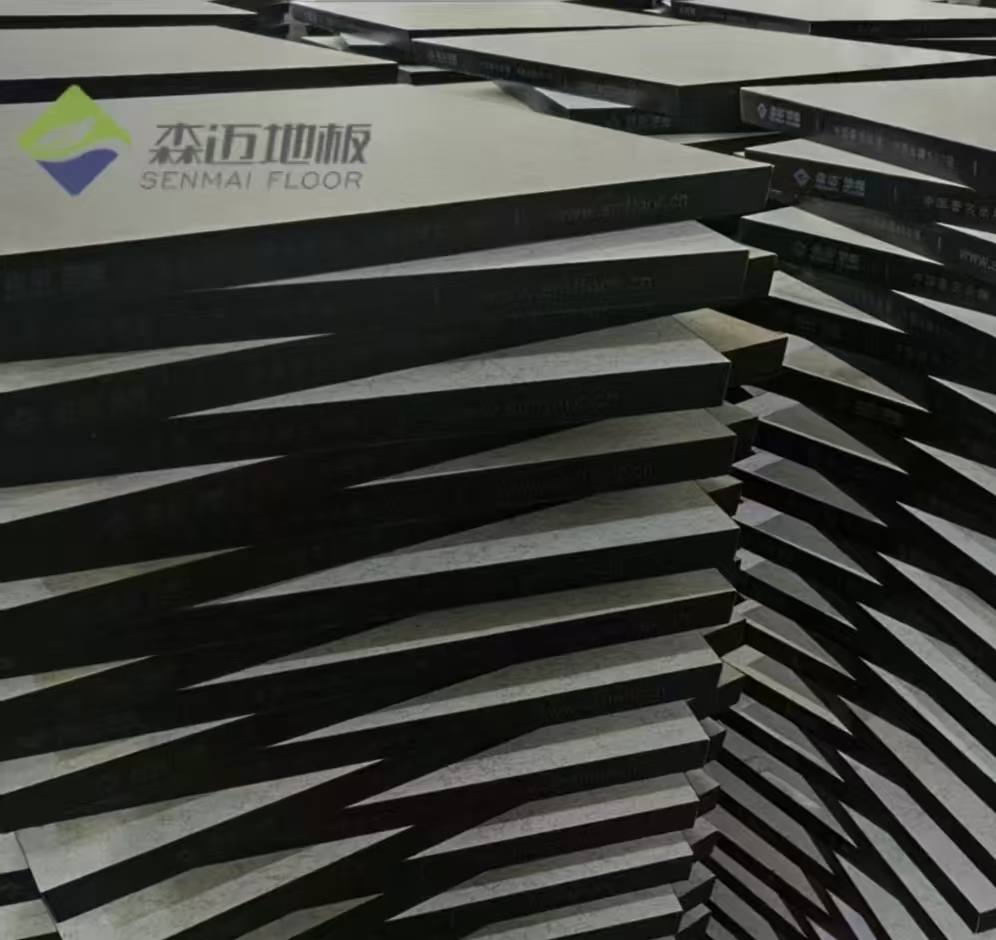
Core components include modular panels, stringers, adjustable pedestals, and a defined subfloor void. Panels are commonly made from steel-encased calcium sulfate, high-pressure laminate, or aluminum—each offering distinct load ratings and static-control profiles. Stringers connect adjacent pedestals and resist lateral movement; pedestals level the floor while creating the void needed for power, data, and cooling distribution. Typical void depths range from 150 mm to 600 mm, depending on cable volume and airflow needs. Crucially, panel surfaces alone cannot dissipate charge unless bonded to ground—so structural and electrical integration must be planned concurrently, not sequentially.
Electrical Integration: Grounding Grids, Panel Bonding, and Continuity Pathways
Effective static control requires uninterrupted electrical continuity. Each panel connects to a copper grounding grid beneath the finished floor. Conductive adhesives or bonding jumpers link panel shells to stringers and pedestals—establishing a low-resistance path from walking surface to building ground. Per ESD best practices, the full system should maintain resistance to ground between 1 × 10⁶ and 1 × 10⁹ ohms. Continuity testing must verify panel-to-panel and panel-to-pedestal interfaces—loose connections, corrosion, or non-conductive coatings can isolate sections and allow dangerous charge accumulation. Because thermal cycling and foot traffic degrade bonds over time, grounding integrity isn’t a one-time installation task—it demands periodic verification. Robust panel bonding directly safeguards servers, storage, and network hardware from intermittent ESD events.
Compliance, Testing, and Real-World Integrity of Anti-Static Raised Access Flooring
Anti-static raised access flooring delivers protection only when resistance, grounding, and continuity are verified against accepted standards—not assumed from marketing claims.
Meeting IEEE 1100 and ANSI/ESD S20.20 Standards for Resistance and System Continuity
Two key standards govern verification. IEEE 1100 (the Emerald Book) treats raised access floor panels as part of the equipment grounding system, emphasizing stable, low-impedance paths. ANSI/ESD S20.20 defines an ESD control program requiring floor resistance to ground below 1.0 × 10⁹ ohms for static-dissipative flooring when personnel or carts interact with ESD-sensitive devices. Testing follows ESD STM7.1: using a 10-pound probe at 100 volts, measurements capture point-to-point and point-to-ground resistance after environmental stabilization at 23 ± 2 °C and 12% ± 3% RH. A compliant system shows consistent readings between 1.0 × 10⁶ and 1.0 × 10⁹ ohms—not just “anti-static” labeling. Periodic verification every 6–12 months detects degradation from coating wear, loosened pedestal connections, or dust contamination that breaks continuity.
Lessons from Failure: Ungrounded Panels Leading to Server Rack Damage and Downtime
Ungrounded panels transform routine movement into equipment risk. In one documented data center outage, ungrounded flooring allowed technicians walking on vinyl tile to charge to 3–5 kV; a subsequent touch to a server rack sent discharge current through network interfaces—corrupting data, failing line cards, and causing 14 hours of unplanned downtime (Uptime Institute 2023). In another case, a missing bonding jumper created an isolated metal island—charge accumulated until arcing occurred to a nearby storage array, destroying four drives. Both failures shared the same root cause: resistance was tested on individual panels, but end-to-end system continuity wasn’t validated post-installation. The lesson is definitive—test the entire grounding pathway, not just surface resistivity. A floor meeting resistance specs without verified low-resistance bonds to ground provides no real ESD protection.
Critical Applications Requiring Anti-Static Raised Access Flooring
Anti-static raised access flooring is specified wherever static discharge threatens equipment reliability, data integrity, or operational continuity.
| Application | Why Anti-Static Raised Access Flooring Is Required |
|---|---|
| Data centers and enterprise IT rooms | Supports high-density server racks and provides grounded underfloor airflow and cable routing |
| Control rooms and command centers | Maintains 24/7 access to critical infrastructure without disrupting operations |
| Semiconductor and pharmaceutical clean rooms | Controls static, resists corrosion, and limits particle shedding |
| Healthcare facilities and laboratories | Routes medical gas, data, and electrical services through clean, accessible pathways |
| Financial trading floors and operations centers | Protects sensitive equipment and secures dense underfloor cabling |
FAQs about Anti-Static Raised Access Flooring
What is anti-static raised access flooring?
Anti-static raised access flooring is a specialized flooring system designed to mitigate electrostatic discharge (ESD) risks by creating a grounded pathway to safely dissipate electrical charges, preventing damage to sensitive electronic devices.
How does anti-static flooring differ from static-dissipative and conductive flooring?
Anti-static flooring minimizes charge generation at the surface, static-dissipative flooring ensures controlled discharge, and conductive flooring provides the quickest charge removal. Each serves distinct purposes based on application requirements.
What materials are used in anti-static raised access floors?
Common materials include steel-encased calcium sulfate, high-pressure laminate, and aluminum panels, integrated with conductive stringers, pedestals, and bonding jumpers to form a grounded network.
Why is periodic testing of the flooring system necessary?
Regular testing ensures uninterrupted electrical continuity and detects degradation from wear, corrosion, or loose connections, which can compromise ESD protection.
Where is anti-static raised access flooring typically used?
It is commonly used in data centers, semiconductor clean rooms, healthcare facilities, finance operations centers, and other ESD-sensitive environments.
Table of Contents
-
How Anti-Static Raised Access Flooring Prevents ESD Damage
- The Physics of Static Buildup and Discharge in Sensitive Electronic Environments
- Anti-Static vs. Static-Dissipative vs. Conductive: Key Differences for Raised Access Flooring
- Design and Integration of Anti-Static Raised Access Flooring Systems
- Compliance, Testing, and Real-World Integrity of Anti-Static Raised Access Flooring
- Critical Applications Requiring Anti-Static Raised Access Flooring
- FAQs about Anti-Static Raised Access Flooring