
 EN
EN




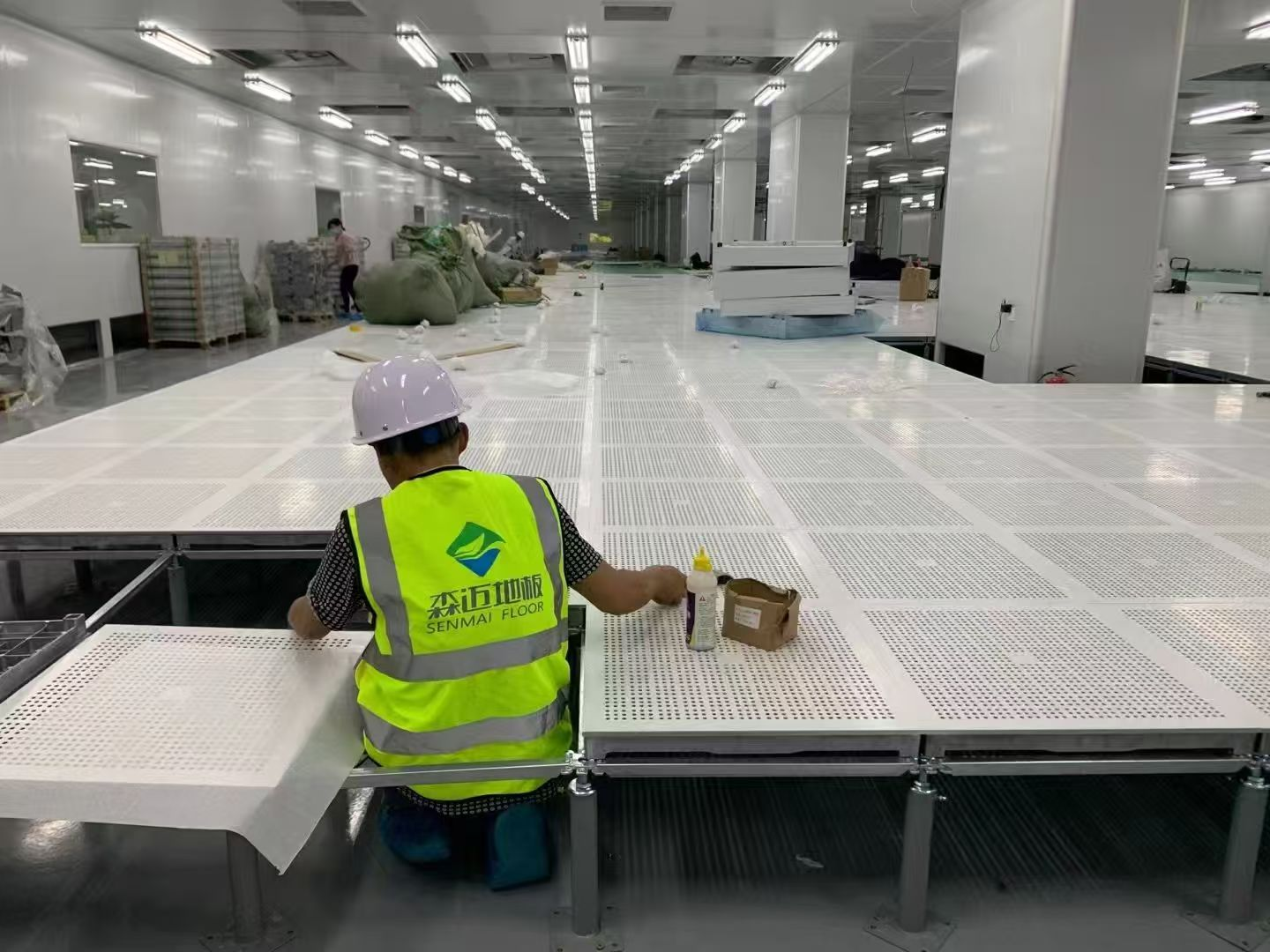
How Air is Managed in the System Below a Building's Raised Access Floor
How the Underfloor Plenum Works as a Pressurized Air Chamber
The air management system in Underfloor plenums utilizes the space beneath the raised floor panels as a form of pressure chamber for the flow of air. When the air is conditioned in the CRAC units, it circulates through the area in a manner that creates a state of pressure equilibrium with the air in the chamber. Because of the arrangement of the underfloor plenums, it prevents the formation of temperature hot spots within the room by guiding the conditioned air to the desired location through the strategically placed perforated tiles. The system is designed with an optimal range of pressure and without significant changes in air flow, achieving the best possible performance for cooling and providing a stable environment for the IT management.
Physics and Performance: Pressure-Differential Delivery to Server Inlets
Targeted cooling works on the principle of pressure variation within the plenum and at the server air intake. This is based on an almost unknown principle of physics called Bernoulli's principle. When a pressure of the plenum is constructed, air will channel to where there is less pressure, the server intakes. In our case, the airflow speeds increased by 25% considering the old overhead systems. The challenge is to position the tiles on the data center floor to take advantage of the pressure variations. Data centers with a pressure differential of 0.05 inches water column on the plenum, on average, witness a drop in server intake temperatures by 4 degrees Celsius. This is according to an Uptime Institute research done, 2022.
Our Access Floors with Air Flow Cooling Efficiency Gains are Quantifiable We have an example of a measured temperature difference of 4.3°C that corresponds with the strategic placement of a perforated tile.
Control of the temperature of the air servers are ingesting is improved with the optimized placement of the perforated tiles. Specifically, when the tile layout corresponds to the hot spots of the server racks, cold air can unobstructed be directed to the server intakes, and not be wasted in an exhausted air recirculation. We have managed to achieve significant results with this as the temperature differentials coming from and going into the servers has been measured to have a 4.3°C lower temperature. This improvement in temperature differentials is absolutely critical in retaining the integrity of cool as the changes of company’s IT configurations continues to evolve.
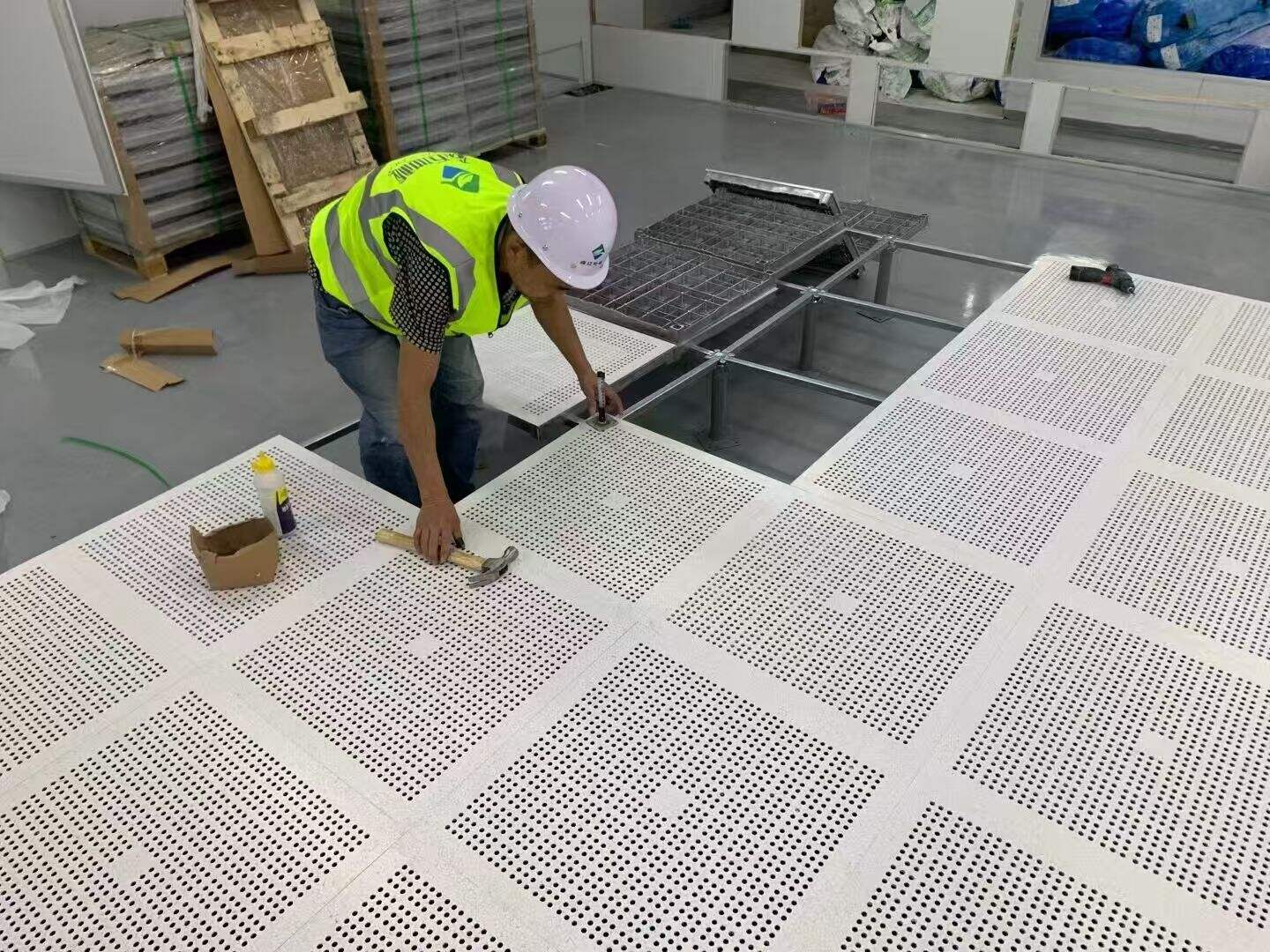
CFD-Driven Optimization: Real-Time Airflow Modeling for PUE Reduction
Utilizing Computational Fluid Dynamics (CFD) modeling shows exactly where heat is building up inefficiently and illustrates how to make adjustments in things such as how many perforations exist in floor tiles, the placement of tiles, and the alignment of cooling units. Research conducted by Lawrence Berkeley National Lab in 2024 states that PUE ratings decrease by about 0.15 with this method in comparison to relying on methods of guesswork. This may not seem like a significant change, but the cooling costs associated with this decrease drop approximately 18% to 30%. The real value comes from systems that continuously monitor and actively control airflow volumes to match server demands. This eliminates hot spots that damage equipment and prevents warm air from bypassing the targeted newly-cooled locations.
Hot Spot Elimination via Air Distribution Uniformity
Raised access floor cooling airflow systems successfully eliminate thermal hotspots, not through excessive cooling, but through uniform and targeted distribution. When correctly designed and implemented, these systems prevent cold air from short-circuiting and hot air from recirculating, and ultimately resolve hotspots that exceed ASHRAE thermal limits by as much as 13.66.
Overcoming thermal stratification through Consistent Underfloor Air Flow
Thermal stratification is a phenomenon caused by warm exhaust air rising and creating a poor quality supply air mix. Air movement under the floor at a speed of around 2.5 meters per second or better helps break thermal layers. Several supplementary measures are necessary to break thermal layers. Sealing cable passthroughs is one. In addition, filling empty spaces in the server racks with blanking panels is a key measure. These measures ensure that cold air is only delivered through the perforated tiles as designed.
Centrally Managed Airflow: Aligning CRAC Output with Tile Layout
Bypass airflow can reduce a data center’s cooling capacity by 25-40%. This is because CRAC units reduce airflow to conditioned air that has not reached the servers. Computational fluid dynamics has shown that the problem can be resolved with a different configuration of tile porosity corresponding to the temperature zones of the rack. Tiles with porosity larger than 56% are likely to lose air to the densest racks. Moreover, the airflow direction of the CRAC units should be aligned with the positioning of the tiles throughout the room. This maximizes the pressure differentials in the system, which is the determining factor in cooling system efficiency.
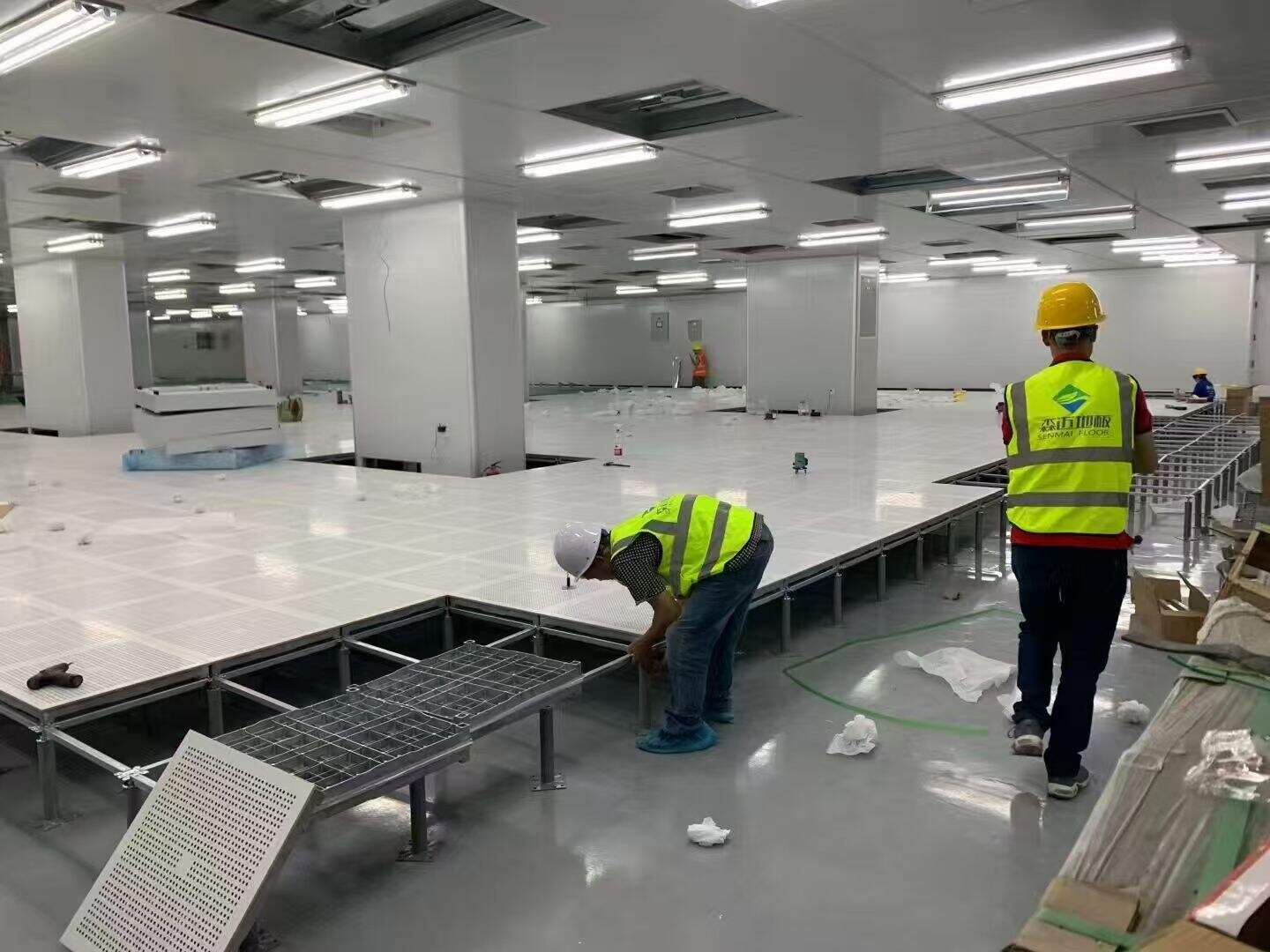
Coherent Strategies for Airflow Management for Raised Floor Environments
Access floors provide the infrastructure for most cooling systems, but they really complement the system when coupled with good airflow management strategies. Hot aisle/cold aisle configurations do not allow for the mixing of warm return air and the incoming supply air. This allows for better temperature consistency throughout the entire aisle. The proper use of blanking panels, along with sealing cable management systems, allows for better pressure containment in the plenum, while reducing wasted energy by approximately 30%. Innovative use of tiles, based on present conditions measured by temperature maps and computer modeling, lead to better responsiveness to system changes.
The combination of these techniques will yield a reduction in the power usage effectiveness (PUE) metric by approximately 0.15-0.3 points, an actual improvement to the efficiency and reliability of cooling systems and the controlled environment.
FAQ Section
What is a raised access floor?
A raised access floor is an elevated floor structure that utilizes the space below it for cabling, HVAC, and other infrastructure.
How does an underfloor plenum help in cooling?
An underfloor plenum is a pressurized air chamber that facilitates an even distribution of conditioned air to minimize hotspots and contour to cooling needs.
What are the benefits of using perforated tiles in access floors?
Perforated tiles improve cooling efficiency by enabling better airflow of cold air to the server intakes, thus controlling the temperature around the servers.
What can be done to evade thermal stratification?
Consistent circulation of air under the flooring systewm as well as sealing of open gaps can promote the controlled and even distribution of cool air.
What is meant by bypass airflow and how can it be avoided?
Bypass airflow is when conditioned air is returned to CRAC units before it has been fully distributed, and to avoid this, it is recommended to configure the CRAC discharge in accordance with the grid design of the tiles.