
 EN
EN




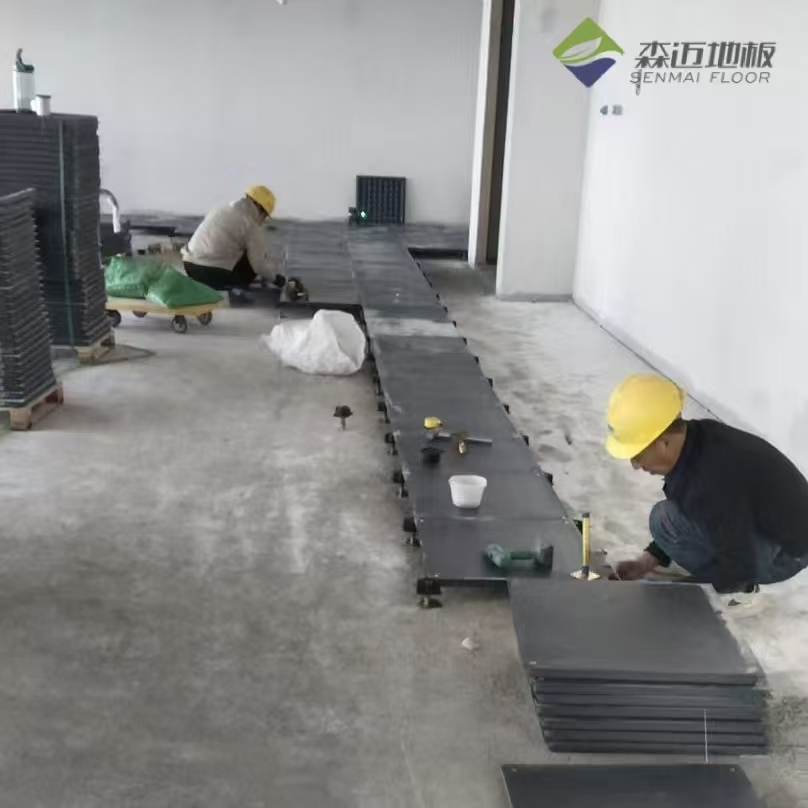
Introduction
High-traffic commercial environments including data center corridors, airport terminals, shopping malls, and retail entrances require flooring systems with long-term structural stability, strong load resistance, and repeated cycle durability.
Steel raised access floors are widely recognized as the most reliable solution for heavy-use scenarios. With engineered hollow steel core structure, these modular floors sustain heavy static loads, repeated rolling equipment pressure, and frequent maintenance lifting without deformation or damage. This article covers the load-bearing advantages, international standard compliance, durability comparison, and real project performance of steel raised floor systems.
Static and Rolling Load Capacity Advantages in High-Traffic Zones
Steel raised access floors provide dual resistance to static stationary weight and dynamic rolling force, which are essential for busy commercial buildings.
Static load capacity supports fixed heavy equipment such as server racks, mechanical devices, and retail safes. Rolling load capacity resists repeated pressure from IT trolleys, scissor lifts, and daily wheeled traffic.
Different from composite panels that easily crack or delaminate under long-term fatigue, steel cementitious core maintains stable structural performance under continuous load cycles. It perfectly fits mixed scenarios where heavy static equipment and frequent mobile traffic coexist, such as data center aisles and commercial building entrances.
Verified steel panel load performance in practical applications delivers stable safety margins:
Standard steel panels support up to 2,000 lbs concentrated static load.
Engineered heavy-duty versions reach 6,000 lbs ultimate static load for extreme safety.
Panels sustain more than 10,000 rolling cycles without structural degradation.
International Standard Compliance for Commercial Safety Certification
Professional third-party certifications ensure steel raised floor performance is verifiable, consistent, and globally recognized.
EN 14286 standard classifies raised floor panels based on working load and ultimate load limits, providing clear specification guidance for commercial projects.
BS EN 12825, the latest European raised floor standard, conducts strict system-level static and rolling load tests to guarantee overall floor stability.
ISO 16419 unifies global testing methods for point load and extreme condition proof loading.
For builders and facility managers, full compliance with these three standards eliminates operational risks and ensures long-term building safety in high-traffic public areas.
Long-Term Durability & Low Maintenance Under Frequent Use
Steel raised floor panels allow over 10,000 repeated lifting cycles for cable adjustment, HVAC modification, and equipment upgrades.
Thanks to rigid hollow steel core and precision locking structure, steel panels will not warp, chip, loosen or lose flatness after long-term repeated disassembly. The factory powder-coated surface provides excellent scratch resistance and anti-corrosion performance.
Long-term inspection data shows steel panels always stay within factory tolerance in flatness and alignment, greatly reducing later maintenance and re-alignment work required by low-grade composite floors.
Steel vs Aluminum & Composite Floors Wear Resistance Comparison
In high pedestrian traffic areas such as airports and shopping centers, steel raised floors show far better wear resistance than aluminum and composite alternatives.
Pure aluminum panels are prone to denting and surface scratching under high heels, rolling luggage and heavy equipment. Composite materials easily absorb moisture, produce edge chipping and internal delamination after years of use.
In contrast, steel core floors matched with HPL or vinyl surface layers resist long-term abrasion and impact. Accelerated aging tests prove steel floors maintain stable appearance, flatness and anti-slip performance equivalent to more than 15 years of actual service, effectively reducing replacement frequency and overall operation costs.
Hollow Steel Core Structural Advantages for Sustained Traffic Loads
The hollow steel core design delivers an optimal stiffness-to-weight ratio. It achieves high structural strength with relatively light panel weight, reducing overall building dead load while supporting heavy equipment.
In addition, hollow steel structure has natural vibration damping properties. It absorbs walking impact and traffic resonance, lowering indoor noise and improving walking comfort in open offices and busy corridors.
Compared with solid aluminum and dense composite floors, steel raised floors are more stable, quieter and more suitable for long-term high-frequency pedestrian scenarios.
Real-World Project Validation: London Heathrow Terminal 5 Case Study
London Heathrow Terminal 5 is a classic high-traffic public application for steel raised access floors.
The terminal bears over 45,000 pedestrian flows every day. After 12 years of continuous operation, the steel raised floor system still fully complies with EN 14286 and BS EN 12825 standards.
After years of rolling luggage impact, frequent panel lifting for infrastructure maintenance, and long-cycle vibration pressure, the floor maintains complete structural integrity without deformation, corrosion or unstable vibration. This long-term stable performance fully proves steel floor’s reliability in mission-critical public and aviation buildings.
FAQ
What is a steel raised access floor?
A steel raised access floor is a modular hollow-core flooring system designed to provide high load-bearing capacity, stable flatness and long-cycle durability for high-traffic commercial and industrial environments.
Why choose steel floors over aluminum and composite panels?
Steel floors feature stronger static and rolling load resistance, better anti-wear and anti-impact performance, zero moisture absorption, and stable long-term structure, avoiding denting, delamination and deformation problems of other materials.
What are the key certified standards for steel raised floors?
Main international standards include EN 14286, BS EN 12825, and ISO 16419, covering load classification, system performance testing and extreme condition verification.
Can steel panels withstand frequent lifting maintenance?
Yes, premium steel raised floors support more than 10,000 lifting cycles without deformation, misalignment or surface damage.
Are steel raised floors suitable for crowded public areas?
Steel floors are the optimal choice for high-traffic spaces such as airports, shopping malls and data center aisles due to superior durability, load capacity and long-term stability.