
 EN
EN




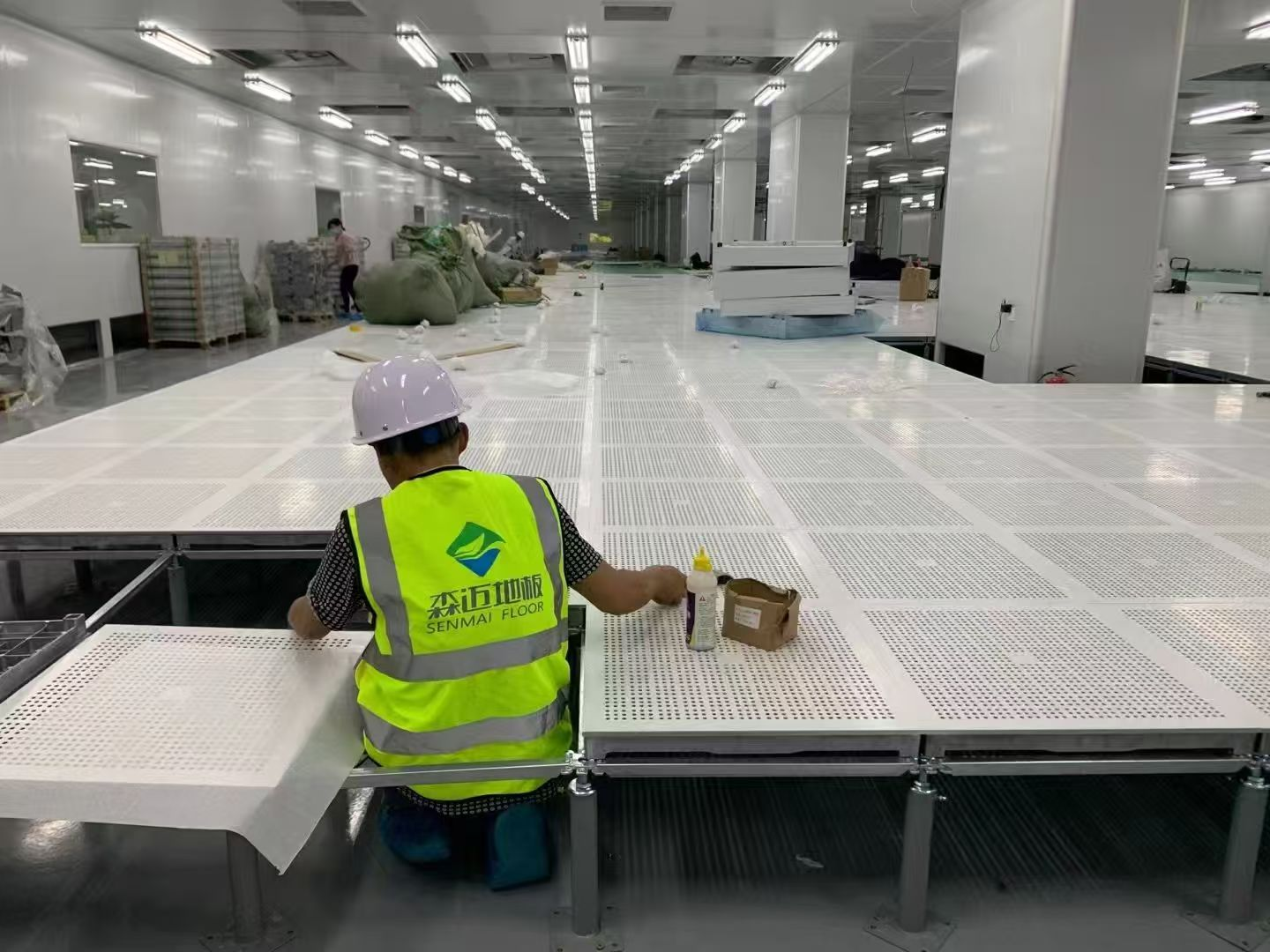
Superior Aesthetic Versatility and Design Customization
Modern commercial and institutional spaces demand flooring that complements high-design interiors without sacrificing performance. A ceramic raised access floor delivers precisely that—uniting the technical benefits of a raised floor system with the visual richness of ceramic tile.
Seamless Integration with Modern Architectural Interiors
Porcelain stoneware panels can be precision-cut to exact modular dimensions, enabling flush integration into any standard grid layout. This eliminates visible gaps or transitions, creating a continuous surface that mimics traditional fixed flooring while preserving full underfloor access for cabling and airflow. Architects specify this solution in open-plan offices, healthcare atriums, and lobbies—spaces where uninterrupted sightlines are essential. Its natural stone-like finish harmonizes with glass, steel, and exposed concrete, supporting biophilic and minimalist design philosophies. The result is infrastructure that remains fully functional yet visually invisible—meeting both aesthetic integrity and operational flexibility.
Color, Texture, and Size Options in Porcelain Stoneware for Ceramic Raised Access Floors
Manufacturers offer an extensive range of porcelain stoneware options: neutral greys and beiges alongside bold accent hues; textures replicating wood grain, polished marble, or brushed concrete; and finishes from matte to high-gloss. Surface slip resistance is certified to DIN 51130 (R9–R13), allowing specifiers to match zone-specific safety requirements—from dry executive suites to wet laboratory corridors. Panel sizes vary to support custom layouts, borders, or wayfinding elements within a single system. This breadth enables cohesive interior coordination across walls, countertops, and floors—without compromising the adaptability of the raised platform.
Enhanced Hygiene, Cleanability, and Infection Control
Non-Porous Ceramic Surface Prevents Microbial Growth and Simplifies Disinfection
Porcelain stoneware’s non-porous structure forms an intrinsic barrier against microbial penetration—unlike vinyl, carpet, or grouted tile, which harbor bacteria, fungi, and viruses in microscopic pores. Its seamless, impervious surface allows rapid, thorough disinfection using hospital-grade cleaners, significantly reducing pathogen persistence. This makes ceramic raised access floors especially valuable in infection-sensitive environments such as hospitals, laboratories, and cleanrooms. Spills and contaminants lift easily, lowering long-term maintenance effort and reinforcing facility-wide hygiene protocols.
Exceptional Durability and Slip-Resistant Performance
Ceramic raised access floors deliver unmatched durability and safety for demanding environments.
High Abrasion Resistance and Load-Bearing Stability in High-Traffic Environments
Porcelain stoneware achieves PEI ratings of 4 or 5—indicating exceptional resistance to scratching, scuffing, and wear—even under sustained foot traffic, rolling equipment, and heavy loads. Its dense, reinforced core ensures even weight distribution, preventing cracking or deformation in data centers, hospitals, and retail zones. Impact resistance guards against chipping from dropped tools or furniture, while chemical resistance protects against corrosive spills. These attributes reduce replacement frequency, minimize downtime, and extend service life across decades.
Certified Slip Resistance (R9–R13) and Dimensional Stability Across Temperature/Humidity Fluctuations
Slip resistance is independently certified per DIN 51130, with ratings spanning R9 (dry commercial areas) to R13 (high-risk wet/oily zones). Panels retain reliable traction when wet—reducing slip-and-fall incidents. Crucially, porcelain stoneware exhibits negligible thermal expansion and contraction. Humidity shifts do not induce warping, buckling, or panel misalignment—preserving levelness, joint integrity, and underfloor accessibility. This dimensional stability ensures consistent performance in regulated sectors like healthcare and food processing, where environmental resilience is non-negotiable.
Ceramic Raised Access Floor vs. Traditional Finishes: A Strategic Material Comparison
When selecting a flooring system for modern commercial spaces, the choice between a ceramic raised access floor and traditional finishes (e.g., poured concrete, vinyl, carpet, or standard ceramic tiles on slab) defines more than appearance—it shapes the building’s operational agility. Traditional finishes are permanently bonded to the subfloor, locking utilities in place and requiring invasive demolition for reconfiguration. In contrast, a ceramic raised access floor merges premium porcelain aesthetics with the inherent adaptability of a modular platform. The table below highlights the strategic distinctions driving long-term value.
| Dimension | Ceramic Raised Access Floor | Traditional Finishes (on slab) |
|---|---|---|
| Service Access | Immediate, non-destructive via removable ceramic floor panels | Destructive – requires cutting, breaking, or grinding |
| Cable & Air Management | Integrated underfloor plenum for data, power, and HVAC (e.g., UFAD) | Limited to surface conduits or embedded channels; no underfloor air |
| Adaptability | High – entire layout can be reconfigured without construction | Low – changes require major renovation |
| Aesthetic Freedom | Wide range of ceramic finishes (colors, textures, sizes) with high-end look | Limited to the chosen finish; cannot easily change without removal |
| Initial Cost | Higher upfront investment | Lower initial installation cost |
| Total Cost of Ownership | Lower over time due to reusability and avoided disruption costs | Higher due to frequent renovation and downtime |
The structural permanence of traditional finishes renders them increasingly incompatible with today’s dynamic technology and spatial needs. A ceramic raised access floor functions as both a premium finished surface and a strategic infrastructure asset—enabling rapid upgrades, minimizing lifecycle costs, and future-proofing facilities against evolving operational demands.
FAQ
What is a ceramic raised access floor?
A ceramic raised access floor is a modular flooring system that combines the aesthetic appeal of ceramic tiles with the functionality of a raised platform. It allows for seamless underfloor access for cabling, airflow, and utilities, while maintaining a premium finish.
What design options are available for ceramic raised access floors?
Manufacturers provide a wide variety of ceramic finishes, including neutral colors, wood grain textures, polished marble, and more. The tiles come in various sizes and finishes, allowing for customized designs tailored to specific spaces.
Are ceramic raised access floors suitable for high-traffic areas?
Yes, these floors are highly durable and achieve PEI ratings of 4 or 5, making them suitable for high-traffic environments like data centers, hospitals, and retail spaces.
How do ceramic raised access floors enhance hygiene?
The non-porous surface of ceramic tiles prevents microbial growth and simplifies disinfection, making them ideal for hygiene-sensitive environments like hospitals and laboratories.
How do ceramic raised access floors compare to traditional finishes?
Ceramic raised access floors offer superior flexibility, easier service access, and a wider range of design options compared to traditional fixed flooring, which often requires invasive renovations for modifications.