
 EN
EN




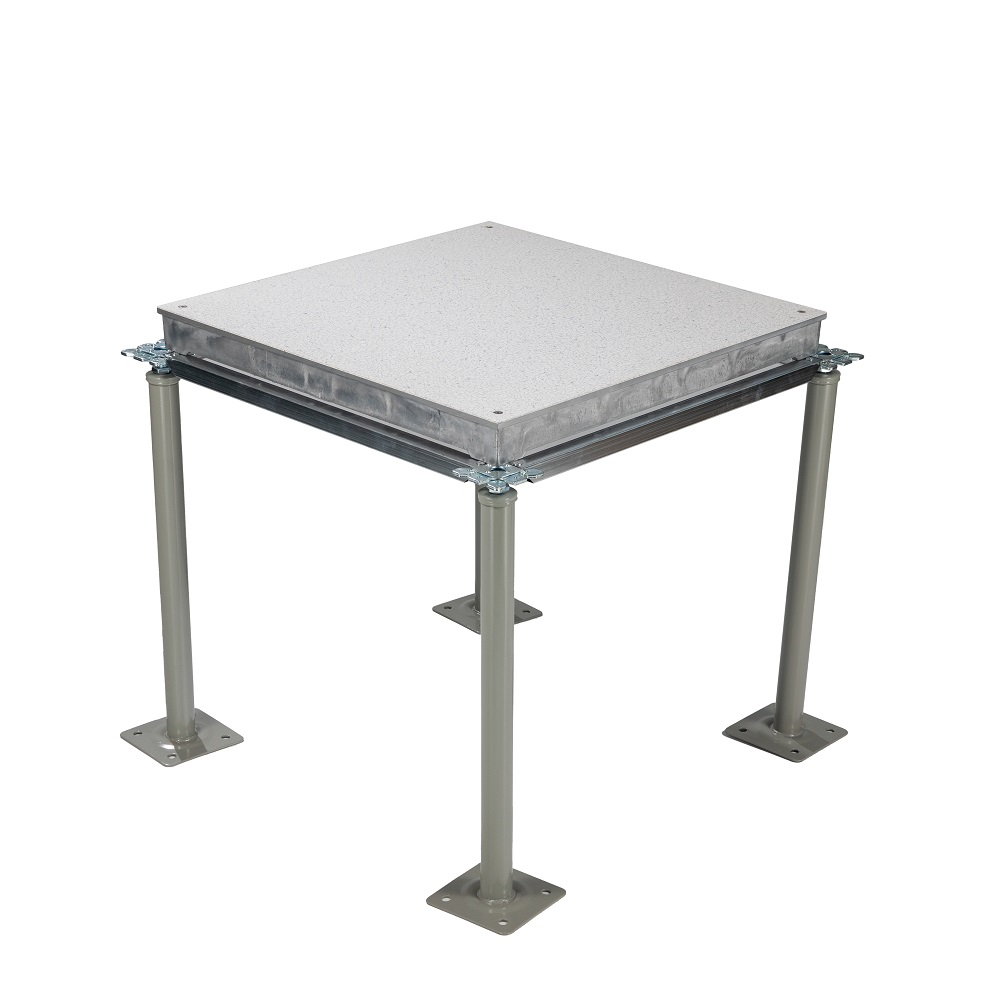
Geotechnical Risk Assessments for Raised Floor Pedestals
Detecting compressible, organic, or poorly drained soils at the locations of the pedestals
The composition of soil significantly impacts the stability of the raised floors. In compressed layers of soil, such as loose sands or silts, a very high degree of packing occurs under stress, and this results in uneven settlements across the floor; Rich organic layers will undergo decay and erosion, creating voids directly beneath the support pedestals. Poor drainage will also show signs, such as puddles after the rain, or prolonged soil moisture, which will all provide indications of inadequate support soil. Standard penetration tests are used by engineers in collaboration with moisture assessments to identify drainage issues. Clay soils with 30% or more clay are particularly a concern, as they will swell significantly when wet which poses a concern for subgrade stability. Typically, these conditions are resolved by excavating the poor fill soils and replacing them with more suitable fill, or by establishing subsurface drainage before pedestals are installed.
Researching moisture cycles and their effects on the stability of the subgrade
Soils that expand when wet undergo cycles of moisture-induced swelling and shrinkage that occur throughout the year. In some situations, the movements that occur from these cycles can displace foundation supports by approximately 3% each year. What are the implications of these movements? Repeated movements from these cycles can cause deflections in the joints of the floors and other features of the structure that are intended to maintain balance which results in increased wear and, ultimately, cause misalignment of the structural components. Those that have to contend with these impacts of seasonal groundwater fluctuation are tasked with performing the routine Atterberg testing to determine the plasticity index, or PI, of the soil. This index, when determined to be greater than 25, indicates that the soil possesses dangerous potential for expansive soil-related problems. Additionally, in arid climates, there are still problems with subsurface water which cause the conditions for capillary rise of the soil which may lift foundations. This research is, however, encouraging. Substantial movement can be expected to be minimized by about 40 to 60 percent when moisture-control additives are used, and vapor barriers are placed, according to research in the ASCE Geotechnical and Geoenvironmental Engineering journals. This is the good news.
Soil Stabilization Methods for Raised Floor Pedestal Loads
The proper engineered fill placement method will help achieve consistent support for the raised floor pedestals. The fill placement and compaction process will include the granular material being placed in a series of controlled layers, and then compacted with vibratory rollers to achieve 95% density per ASTM D1557 standards. Systematic interlocking, particle compaction, and air pocket elimination will be accomplished with fill to satisfy the minimum requirement for bearing capacity of 2,500 psf. In instances of heavy load equipment placement, die to avoid settlement issues, that level of support will be required. The majority of professionals perform nuclear density testing and corresponding plate load testing as the primary means of level of compaction within the said parameters. The Geotechnical Engineering Circular No. 7 (FHWA) shows research conducted that outlines the poor compaction steps as moist areas demonstrate a near 50% increase in the areas of failure.
Localized reinforcement via targeted soil nailing and grouting beneath specific pedestals
For most installations, especially with heavy added loads such as server racks or UPS batteries, it becomes vital to provide ground reinforcement beneath the installation. An example of such ground reinforcement is permeation grouting. This is the process by which a cement mixture is injected into porous soil or rock formations. The cement mixture binds the soil or rock particles, essentially holding them in place. Concurrently, soil nails or steel rods which are rust resistant and are installed at specific, strategically designed locations to provide lateral support. These combined processes can be designed to increase sliding resistance by as much as a factor of three in silt soil. Additionally, the soil nails and permeation grout form a drainage system which relieves problematic subsurface water to help prevent soil expansion and contraction. During the grouting process, pressure is continuously monitored to ensure no detrimental effects occur to adjacent building foundations.
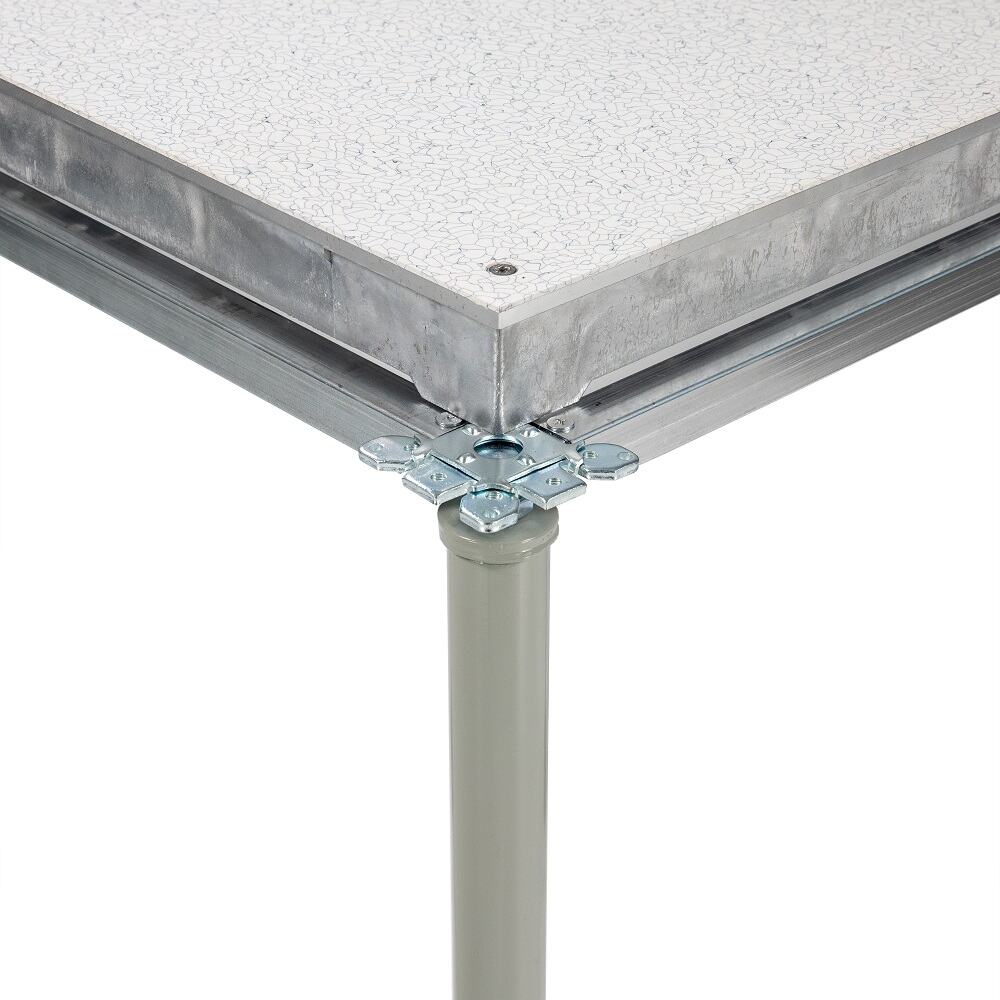
Drainage Solutions for Maintaining Raised Floor Pedestals
Good water management protects subgrade density from erosion or saturation under raised floor pedestals. Important integrated strategies include the following:
- Subsurface drainage systems (such as PVH perforated pipe wrapped in geotextile) divert water from the base of pedestals.
- 1-2% surface grading (sloped) directs surface water (stormwater) runoff away from the load-bearing area to reduce potential hydrostatic pressure.
- Capillary breaks (of 6 to 12 inches of washed gravel) located under the pedestals interrupt the moisture migration.
- Perimeter drainage (with continuous flow sensors) provide advance warning of blockages prior to compromised bearing capacity due to infiltration.
This integrated approach (plus waterproofing membranes above the structural slabs) has been shown to reduce moisture-related settlement incidents of high-humidity environments by 67% in the International Journal of Geotechnical Engineering. Regular inspections post rain maintain pedestal alignment stability.
Foundation Design Alternatives Supporting Settled Load Balance to Raised Floor Pedestals
The right choice for systems for foundation superstructure determines assured equal load transfers to floor raised pedestals while limiting differential settlement. This choice is dependent on the load magnitude and the specific condition of the soil.
Choosing isolated footings, structural slabs, or micropiles depending on site soil conditions and load magnitude
Isolated footings perform well when site soils are dense, non-threatening to freezing, and column loads exceed 2,500 pounds per square foot. Structural slabs are good in situ when the ground is weak or subject to seasonal expansion because they help to distribute the structural and superimposed loads. This is especially true in areas of significant clay or heavy mixed soils. Micropiles are used when weak upper soil layers are encountered because they bypass the weak layers and carry the load all the way to competent subsoils. Micropiles are particularly effective in areas of organic soils, soft soils, or frost areas where traditional shallow foundations would lead to significant settlement or heaving.
Type of Foundation Soil Profile Use/Advantage Load Capacity
Isolated Footings Dense, Frost Free site Handles Concentrated Column Load
Structural Slabs Expansive/clayey soil Distributes Uniform Live/Dead Load
Micropiles Organic/compressible strata Bypasses weak surface soils
Selection must rely on soil test data, particularly SPT N-values, PI, and moisture profiles. For northern sites, the foundation must be placed below the frost line (ASCE 7-22). In areas of high moisture, drainage must be provided to maintain the effective bearing capacity over time.
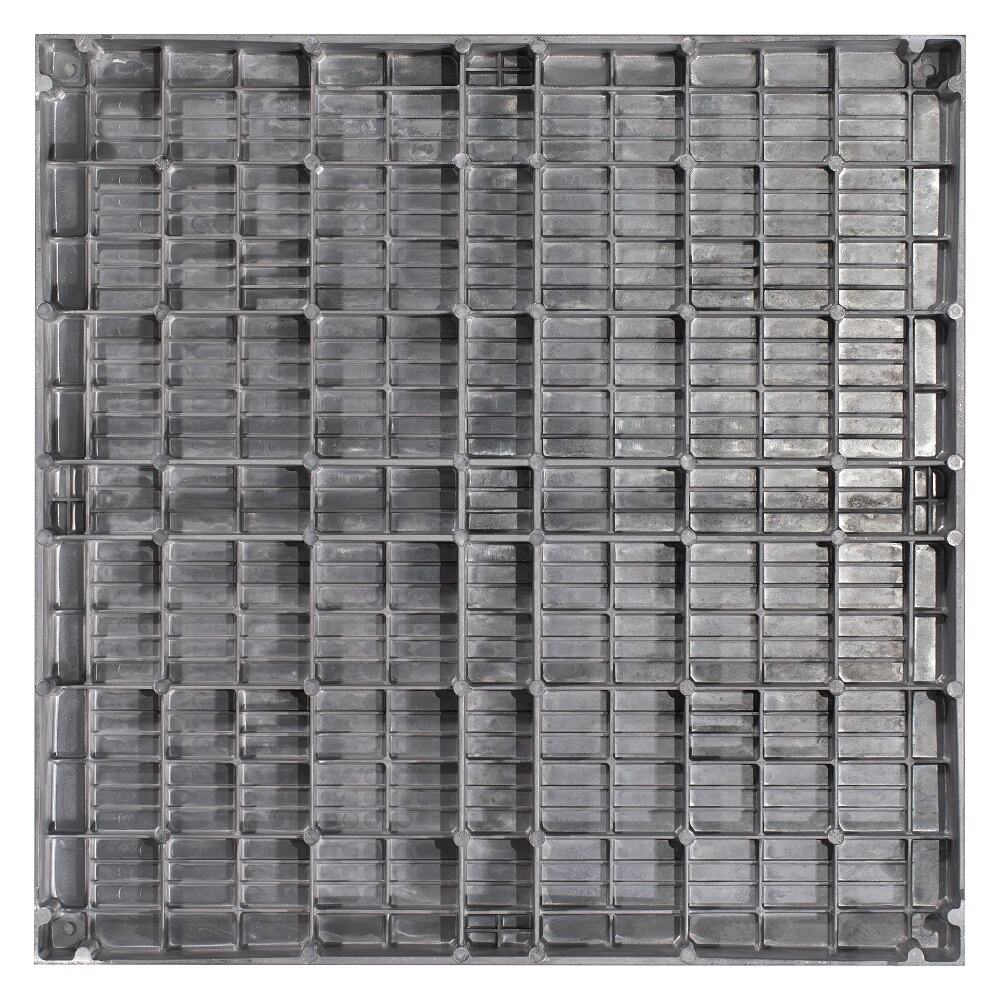
Monitoring and Maintenance of Raised Floor Pedestals
Costly downtime can be prevented and sensitive equipment can be saved by early detection of pedestal movement. Accurate baseline measurements can be established by laser leveling, which allows future evaluations to be compared against a solid benchmark.
Periodical deployment of IoT tilt sensors to supplement baseline laser leveling
Tilt sensors / IoT devices are used to monitor and report the tilt of pedestals in real-time. These are designed to detect vertical tilt of < 1 mm, and horizontal tilt of < 0.1 degrees. When the readings exceed a specified threshold, the sensor's reporting mechanism triggers an alert to allow technicians to realign the devices before equipment malfunction. Maintenance crews still do manual checks against the baseline laser measurements for sensor accuracy. According to the Ponemon Institute, data centers that incorporate manual checks in addition to the routine automatic checks outperform centers that only check manually, and are able to identify potential issues 85% faster and are able to decrease equipment fails due to unassessed shifting ground by 92%.
FAQ
What do you identify as signs of poor soil drainage beneath raised floor pedestals?
Weak drainage can be indicated by puddling or by standing water for prolonged periods of time. In these situations, the ground support is likely to be too weak.
What role does soil compaction play when it comes to raised floor pedestals?
Soil compaction allows for uniform support and less air voids and meets the required bearing capacity to support equipment load and avoid settlement problems in the future.
What role does Grouting and soil nailing play in soil stabilization for floor pedestals?
Grouting and soil nailing play the role of supporting soil structure and giving more resistance against sliding or water to stabilize the floor pedestals.
What are drainage strategies that benefit the raised floor pedestals?
Subsurface drainage, sloped surface grading, capillary breaks, and drainage channels are some of the strategies that will positively manage water and maintain the density of the subgrade to avoid erosion or saturation.
What foundation design strategies are there with respect to uniform load transfer?
Design strategies consist of as isolated footings appropriate for dense soils, structural slabs suitable for expansive or clayey soils, and micropiles for overcoming less supporting surfaces. This is dependent on soil profile, load capacity, and other environmental conditions.