
 EN




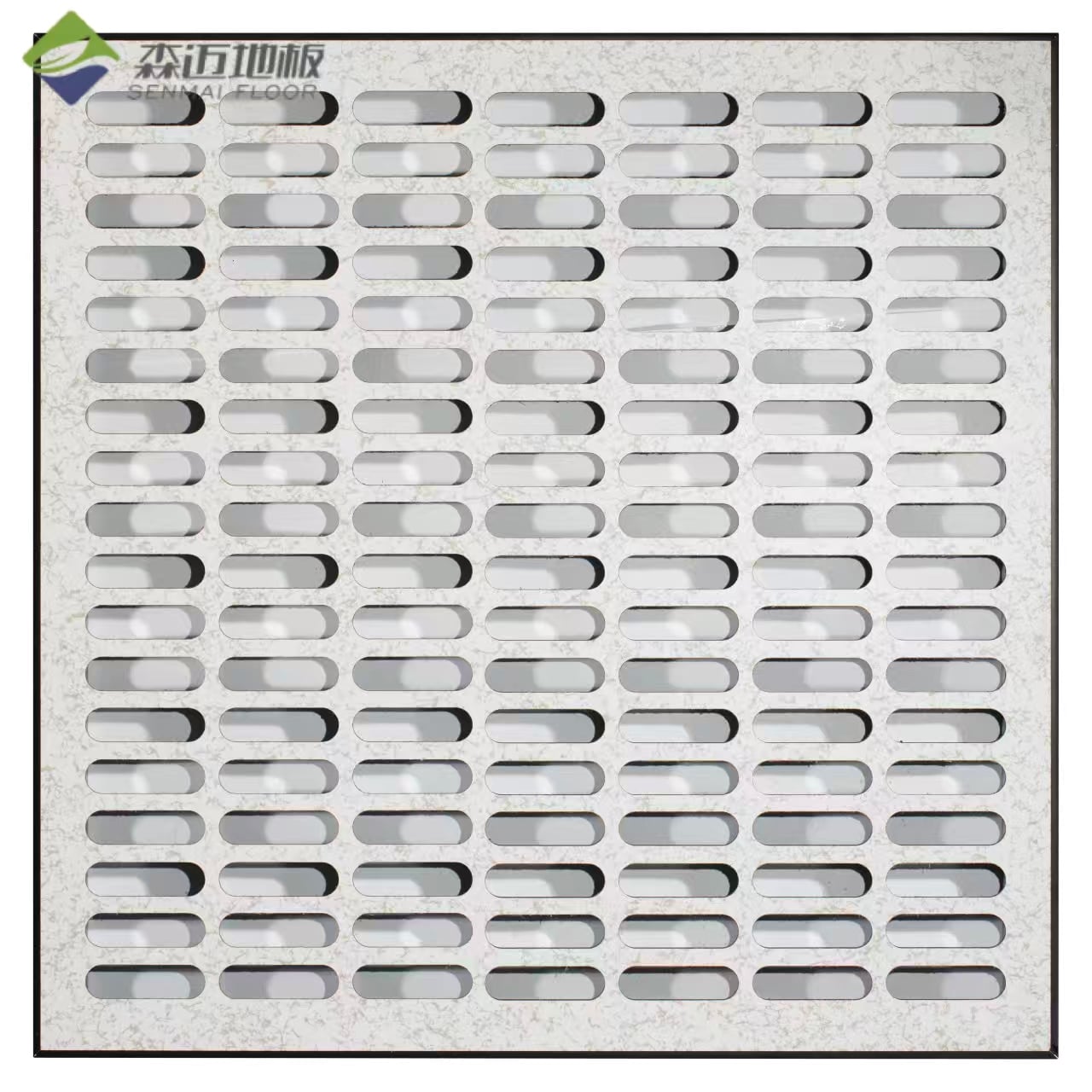
Typical Lifespan of a PVC Raised Access Floor Under Real-World Conditions
A PVC raised access floor is a modular platform used in commercial offices and data centers to manage cabling, airflow, and static loads. Its real-world service life depends on panel construction, installation quality, and operating conditions—not a single printed number.
Standard service life: 15–25 years in commercial and data center environments
For most commercial office and data center environments, a PVC raised access floor has a realistic service life of 15 to 25 years. A 2019 industry review of raised floor age and safety noted that major manufacturers publish a 20-year life cycle. Some floors in dry, low-traffic spaces continue to perform well after 30 years; others with poor subfloor preparation or moisture exposure show panel failure before 15 years. These figures are averages—not guarantees.
Panel and component lifespans often differ. Floor panels with vinyl or PVC surfaces may last up to 25 years. Understructure components such as pedestals and stringers can remain serviceable for up to 50 years because they avoid direct surface wear—a distinction recognized in specifications like PSA MOB PF2 PS/SPU. European standard BS EN 12815 does not assign a fixed lifespan, but suppliers commonly offer a 10-year warranty on completed systems. In practice, a well-installed PVC raised access floor in a controlled environment usually reaches the middle or upper end of that 15-to-25-year range.
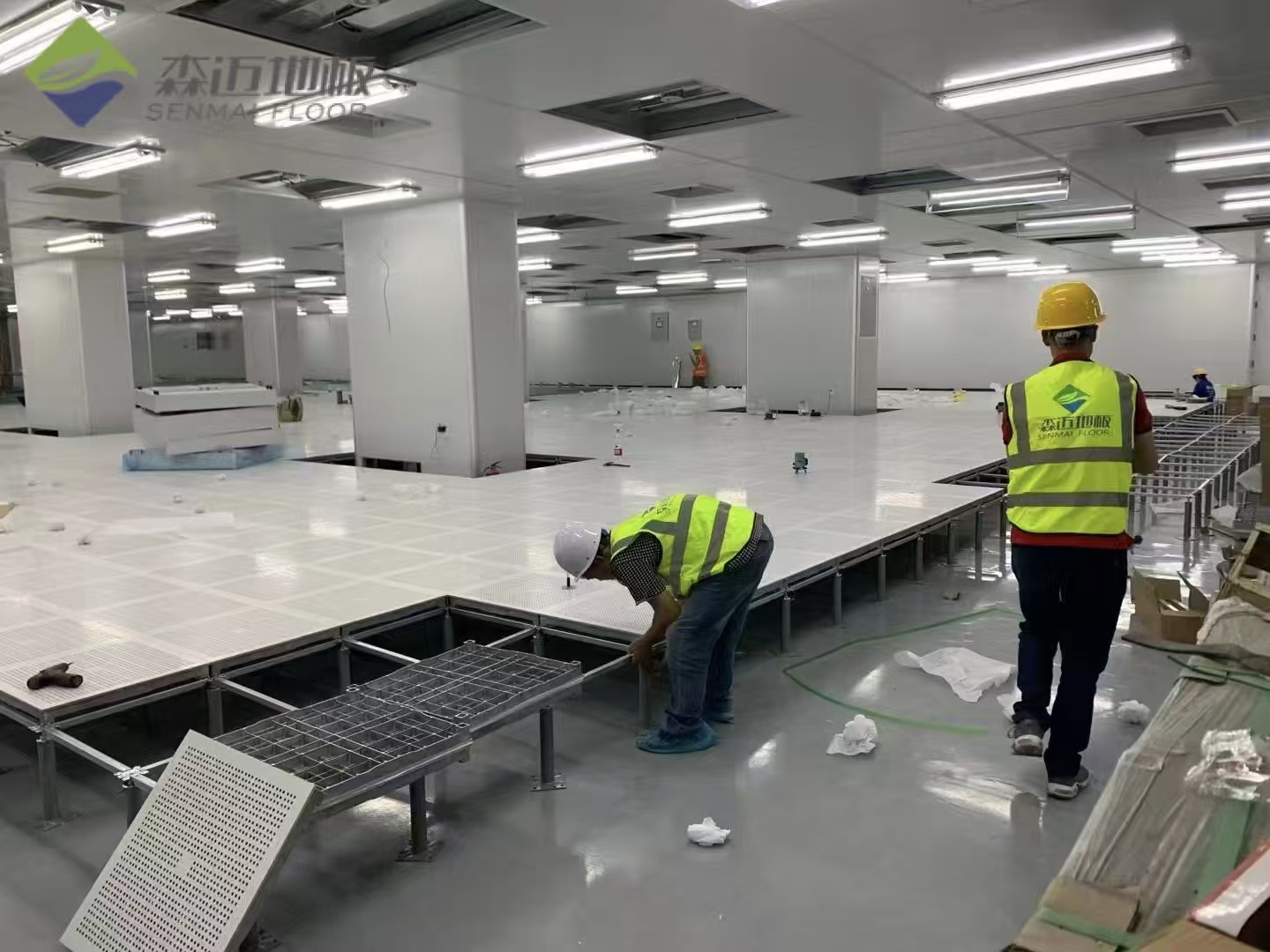
Key environmental and operational factors that accelerate or extend PVC raised access floor longevity
Several conditions determine whether a PVC raised access floor reaches the upper or lower end of its expected 15-to-25-year range. The main variables are moisture, load, temperature, and maintenance.
- Subfloor moisture and humidity: Dampness causes panel warping, adhesive breakdown, and mold growth. Keeping relative humidity near 50% slows aging.
- Heavy rolling loads: Server cabinets, carts, and moving equipment create concentrated point loads. Panels with higher load ratings resist cracking longer.
- Thermal cycling: Heat from equipment and cool underfloor air cause expansion and contraction, loosening seams and edge trim over time.
- Abrasive grit: Dirt and sand act like sandpaper on PVC surfaces. Daily dry or damp mopping removes grit before it embeds in the wear layer.
- UV exposure: Direct sunlight or strong artificial UV can fade and embrittle PVC without adequate UV stabilization.
In a climate-controlled data hall with light foot traffic and regular cleaning, the floor often lasts 20 to 25 years. The same PVC raised access floor in a humid, high-roll-load environment may need panel replacement in less than 15 years.
How Material Quality and Manufacturing Affect PVC Raised Access Floor Durability
Core composition, wear layer thickness, and UV stabilization’s role in long-term performance
The durability of a PVC raised access floor is set long before installation. Core composition determines structural load capacity, moisture resistance, and long-term dimensional stability. Steel plate and cementitious board cores typically outperform chipboard or particle board under repeated point loads and high-humidity conditions—moisture-resistant cores also prevent warping and adhesive breakdown in humid underfloor cavities. Wear layer thickness controls surface endurance: premium panels with a thicker PVC wear layer resist abrasion, scratching, and frequent cleaning longer than thin economy-grade coatings. UV stabilization protects against yellowing, surface cracking, and brittleness, especially in spaces with indirect sunlight or high-intensity lighting. Although most raised access floors in data centers and control rooms are not exposed to direct sunlight, UV-stable topcoats still slow polymer degradation from lighting and environmental exposure. For ESD (electrostatic discharge) areas, stable surface resistivity also depends on the quality of both the core and PVC compound. Selecting a panel with a dense core, a clearly stated wear layer thickness, and a UV-stable finish supports 15–25-year service life expectations.
Recognizing premium vs. economy-grade PVC raised access floor panels through spec sheets
When comparing spec sheets, look beyond panel dimensions. Higher-grade panels with PVC coverings list core material, wear layer thickness in mm or mils, surface resistivity for ESD, impact load, rolling load, flame spread, and warranty. Economy panels often omit one or more of these values. A missing wear layer thickness or a vague “PVC finish” is a red flag. Premium grades usually specify a wear layer of 1.0 mm or higher, while economy options often fall between 0.3–0.5 mm. Use the following table to compare key indicators.
| Specification | Premium PVC panels | Economy PVC panels |
|---|---|---|
| Core material | Steel plate, cementitious board, or calcium sulfate | Chipboard, particle board, or unspecified |
| Wear layer thickness | 1.0 mm or higher, clearly stated | 0.3–0.5 mm, often omitted |
| Surface resistivity | Clearly rated for ESD applications | Vague or absent |
| Load ratings | Rolling, point, impact, and static loads listed | Often only static load or none |
| Standards / tests | EN 12825 or equivalent test reports | Limited or no third-party data |
| Warranty | 10–25 years | 1–5 years or none |
Spec sheets that omit thickness, core data, or third-party test reports usually indicate economy-grade construction—potentially shortening replacement cycles and reducing long-term panel durability.
Maintenance Practices That Maximize PVC Raised Access Floor Lifespan
Routine upkeep keeps a PVC raised access floor stable and extends its service life well beyond poor maintenance scenarios.
Daily cleaning protocols and periodic inspections to prevent premature aging
Daily cleaning removes abrasive particles that can scratch the wear layer of an access floor panel. Dust mop or vacuum the surface every day to stop grit from grinding into the finish. Use a pH-neutral damp mop weekly; avoid harsh solvents that degrade PVC. Inspect panels, edge trim, and pedestals quarterly. Look for loose panels, cracked corners, delamination, or wobbling underfoot. Rotate panels between high-traffic and low-traffic zones at least twice a year to spread wear evenly and delay visible aging. Check grounding clips, stringers, and gaskets during each rotation—and replace missing or damaged components immediately. Avoid dragging heavy objects directly across the surface. Place protective pads under furniture and equipment legs. Schedule cleaning after any construction or cable pull to remove debris before it embeds. A yearly professional inspection helps catch structural shifts before they become costly. Record inspection findings to track wear trends over time. Consistent cleaning and inspection routines prevent small issues from turning into premature panel replacement.
Impact of subfloor moisture, heavy rolling loads, and thermal cycling on panel integrity
Moisture trapped beneath an access floor can soften adhesives, warp panels, and promote mold. Maintain plenum airflow and keep relative humidity stable. Use moisture barriers or dehumidifiers in plenum spaces with persistent high humidity. Heavy rolling loads from equipment carts or server racks concentrate force along panel edges—this can crack corners or loosen pedestal connections over time. Use load-rated panels in high-traffic aisles and distribute rolling loads with protective mats. Thermal cycling causes PVC and metal understructure to expand and contract at different rates. Repeated cycles may loosen fasteners and create squeaks or movement. Check understructure alignment after seasonal temperature shifts and re-tighten pedestals as needed. These three factors—moisture, rolling weight, and temperature swings—work together to shorten panel integrity if left unmanaged. Proactive controls preserve structural stability and extend the usable life of the floor.
When to Replace: Signs of End-of-Life and Cost-Benefit Analysis for PVC Raised Access Floors
Knowing when to replace a PVC raised access floor is an operational decision—not a routine maintenance call. Early end-of-life indicators include repeated panel rocking even after pedestal adjustment, edge trim separation, cracks radiating from cutouts or corners, and visible delamination of the PVC surface from the core. In data center settings, enlarged panel gaps and airflow bypass are especially serious because they reduce underfloor cooling efficiency and create localized hot spots. Additional warning signs include excessive deflection under rolling loads, grounding continuity failures at multiple pedestal connections, and increased surface wear that compromises cleanliness in sensitive rooms.
The cost-benefit test should weigh total five-year ownership—not just the immediate repair invoice. Replacing a few damaged panels may look less expensive in the first year, but mismatched heights and aging adjacent components often create repeat service calls that erode the savings. A full-system replacement typically becomes the better economic choice when a significant portion of panels in the same zone show structural or core defects, when replacement panels are no longer dimensionally compatible with the existing grid, or when the risk of unplanned downtime outweighs the incremental cost of new flooring. In these cases, continuing with isolated repairs usually becomes false economy.
FAQs
What is the typical lifespan of a PVC raised access floor?
The typical lifespan of a PVC raised access floor ranges from 15 to 25 years, depending on factors such as installation quality, operating conditions, and maintenance practices. In ideal conditions, the lifespan may extend beyond 30 years.
Can environmental factors affect the lifespan of a PVC raised access floor?
Yes, environmental factors like moisture, temperature changes, heavy rolling loads, and grit can significantly impact the lifespan. Maintaining a controlled environment and proper maintenance can extend life expectancy.
How do I identify high-quality PVC raised access floor panels?
Premium panels list specifications such as core material, wear layer thickness, and load ratings. Key indicators include steel or cementitious cores, wear layer thickness of 1.0 mm or higher, and warranties up to 25 years.
What are the signs that a PVC raised access floor needs replacement?
Signs include repeated panel rocking, edge trim separation, corner cracks, delamination, enlarged gaps, and reduced structural integrity. These issues are often compounded by aging and incompatible replacement panels.
What are the best maintenance practices for extending the service life of PVC raised access floors?
Regular dust mopping, weekly damp mopping with pH-neutral cleaners, annual inspections, and rotation of panels between high- and low-traffic zones are vital. Address subfloor moisture, heavy rolling loads, and temperature changes promptly to maintain panel integrity.
Table of Contents
- Typical Lifespan of a PVC Raised Access Floor Under Real-World Conditions
- How Material Quality and Manufacturing Affect PVC Raised Access Floor Durability
- Maintenance Practices That Maximize PVC Raised Access Floor Lifespan
- When to Replace: Signs of End-of-Life and Cost-Benefit Analysis for PVC Raised Access Floors
-
FAQs
- What is the typical lifespan of a PVC raised access floor?
- Can environmental factors affect the lifespan of a PVC raised access floor?
- How do I identify high-quality PVC raised access floor panels?
- What are the signs that a PVC raised access floor needs replacement?
- What are the best maintenance practices for extending the service life of PVC raised access floors?